Songs You Need to Listen to this International Day of Pink

Today, break out your brightest pink outfit, your biggest smile, and your kindest heart! It's International Day of Pink – a day dedicated to celebrating diversity, fighting against bullying, and creating a world where everyone feels safe, respected, and celebrated for who they are.

What started as a courageous act by a few high school students has transformed into a worldwide movement. This awesome day reminds us that small acts of kindness can spark powerful change. It's a chance to stand together, raise our voices, and show the world that love will always win. Whether you're proudly wearing pink, speaking up for someone who needs it, or simply starting a conversation about inclusion, every action counts.

When is the International Day of Pink?

The International Day of Pink is always the second Wednesday in April. In 2024, that is April 10th.

What is the International Day of Pink?

International Day of Pink has a simple but powerful origin story. It all began at a high school in Canada, where a student was relentlessly bullied simply for wearing a pink shirt. But instead of letting the bullying continue, two courageous classmates, Travis Price and David Shepherd, decided to take a stand. Deeply affected by the injustice, they bought dozens of pink shirts, passed them out, and rallied their entire school to wear pink in a powerful display of solidarity.

This act of kindness ignited a movement. It showed the targeted student that he wasn't alone and sent a clear message that bullying and discrimination wouldn't be tolerated. What started as a local act of support quickly spread, inspiring similar events in schools across Canada. Soon, the second Wednesday of April was officially recognized as International Day of Pink – a day dedicated to celebrating diversity, challenging prejudice, and fostering environments where everyone feels safe, respected, and celebrated.

Today, International Day of Pink is a global phenomenon. From schools and community centers to workplaces and social media, people around the world wear pink, organize events, and engage in conversations promoting kindness and acceptance. It's a powerful reminder of the ongoing fight against bullying and a testament to how even small gestures can create a ripple effect of positive change.

Celebrate International Day of Pink with Music

Music can be a powerful weapon in the fight against bullying and discrimination! Songs with messages of empowerment and self-acceptance can uplift our spirits, remind us that we're strong, beautiful the way we are, and deserve a world where we are all celebrated. Let's dive into some awesome tracks perfect for creating an unforgettable International Day of Pink playlist filled with music against bullying!

Songs Celebrating Resilience and Self-Love

  • This is Me - from The Greatest Showman (performed by Keala Settle, also covered by artists like Demi Lovato and recently performed in our Drag Me to the Movies concert): This empowering anthem celebrates self-acceptance and finding the strength to be proud of who you are, even if you feel different.

“When the sharpest words wanna cut me down,

I’m gonna send a flood, gonna drown them out.

I am brave, I am bruised, I am who I’m meant to be.

This is me.”
  • Roar - Katy Perry: A classic self-empowerment song about finding your voice and refusing to be silenced.

“I got the eye of the tiger, a fighter,

dancing through the fire

’Cause I am a champion

and you’re gonna hear me roar”
  • Brave - Sara Bareilles: A beautiful reminder that courage lies within all of us, even when it feels hard to speak up.

“You can be amazing

You can turn a phrase into a weapon or a drug

You can be the outcast

Or be the backlash of somebody’s lack of love

Or you can start speaking up”.
  • Scars to Your Beautiful - Alessia Cara: This song challenges beauty standards and celebrates the unique stories our "scars" represent.

“There’s a hope that’s waiting for you in the dark

You should know you’re beautiful just the way you are

And you don’t have to change a thing”
  • Born This Way - Lady Gaga (LGBTQIA+ artist): An iconic LGBTQIA+ anthem of acceptance and a reminder that we were all born to be exactly who we are.

“No matter gay, straight, or bi, lesbian, transgendered life

I’m on the right track, baby, I was born to survive”
  • Shake it Off - Taylor Swift: A playful pick-me-up song about shrugging off negativity, letting go of judgment, and embracing your authentic self.

“Haters gonna hate, hate, hate, hate, hate

I’m just gonna shake, shake, shake, shake, shake, shake it off”
  • Sissy That Walk - RuPaul: This empowering dance-pop anthem encourages owning your individuality, strutting with confidence, and defying expectations, , perfect for building self-esteem in the face of bullies.

“Pick myself up, turn the world on its head

Don’t forget what, don’t forget what my mama said

People talking since the beginning of time

Unless they paying your bills, pay them bitches no mind”

Songs Celebrating Uniqueness

  • True Colors - Cyndi Lauper: A timeless anthem about letting your true self shine and not being afraid to stand out.

“Your true colors are beautiful like a rainbow”.
  • Keep Your Head Up - Andy Grammer: An upbeat reminder that everyone deserves a chance to shine and that individuality is beautiful.

“I know it’s hard, know it’s hard

To remember sometimes

But you gotta keep your head up, oh oh

And you can let your hair down, eh eh eh eh eh”
  • Firework - Katy Perry: This track encourages listeners to let their inner light shine bright, recognizing that each person is special and has something unique to offer the world.

“You don’t have to feel like a waste of space

You’re original, cannot be replaced

If you only knew what the future holds

After a hurricane comes a rainbow”.
  • Raise Your Glass - P!nk: This energetic pop-rock anthem encourages everyone to let their unique personalities shine and celebrate their quirks.

“So raise your glass if you are wrong,

in all the right ways”.
  • Fkin' Perfect - P!nk:** A defiant song about resisting societal pressure to fit a certain mold and embracing yourself, flaws and all.

“Pretty, pretty please, don’t you ever,

ever feel like you’re less than f**kin’ perfect”.

Songs About Allyship and Standing Up for Others

  • Imagine - John Lennon: A timeless classic, envisioning a world without divisions, a perfect message for International Day of Pink.

“You may say I’m a dreamer, but I’m not the only one.

I hope someday you’ll join us, and the world will live as one”
  • You Will Be Found - from Dear Evan Hansen: This song offers a message of support and inclusion for anyone who has felt alone or ostracized, reminding them of the importance of being seen and valued.

“Even when the dark comes crashing through,

when you need a friend to carry you,

and when you’re broken on the ground, you will be found.”
  • We're Not Gonna Take It - Twisted Sister: A fierce anthem urging listeners to stand up against injustice and fight for what's right, even if it means challenging the status quo.

“Oh, we’re not gonna take it,

no, we ain’t gonna take it, oh,

we’re not gonna take it anymore”.
  • Where is the Love? - The Black Eyed Peas: This soulful hip-hop track questions intolerance and envisions a world filled with empathy and compassion. Key lyric:

“Father, father, father, help us

Send some guidance from above

’Cause people got me, got me questioning

Where is the love?”
  • Can't Take That Away (Mariah's Theme) - Mariah Carey: A deeply personal anthem about overcoming adversity, embracing your strength, and refusing to let the negativity of others break you down.

“And they can try hard to make me feel that I

Don’t matter at all

But I refuse to falter in what I believe

Or lose faith in my dreams”

Here's how you can harness the power of music to make this Day of Pink unforgettable:

  1. Pump Up Your Pink Day Playlist!

    Choose your favorites from this list or find even more empowering anthems. Turn up the volume and let the music fuel your Day of Pink spirit.

  2. Share the Soundtrack of Kindness

    Did a song give you goosebumps or lift your mood? Pass it on! Share these tracks with friends or someone facing a tough time.

  3. Turn Up the Conversation

    Music has a way of opening hearts and minds. Use these songs as a starting point for discussions about bullying, acceptance, and building a better world.

  4. Get Your Creative Juices Flowing

    Feeling inspired? Channel the positive energy of these songs into your own artwork, writing, or other creative projects. Spread messages of empowerment!

  5. Keep the Good Vibes Flowing

    Did we miss your absolute favorite International Day of Pink anthem? Share it in the comments! Let's keep building a playlist that celebrates kindness, courage, and the beauty of being yourself.

Remember, the fight against bullying and the celebration of diversity don't stop with just one day. Let the spirit of International Day of Pink echo throughout the year. Carry these songs with you. Keep spreading kindness. Keep speaking up for what's right. Keep working to build a world where everyone feels safe, respected, and celebrated for exactly who they are.

Together, we can create a world where the music of acceptance overpowers the noise of hate.
10 LGBTQ+ Choirs and Choruses That Inspire

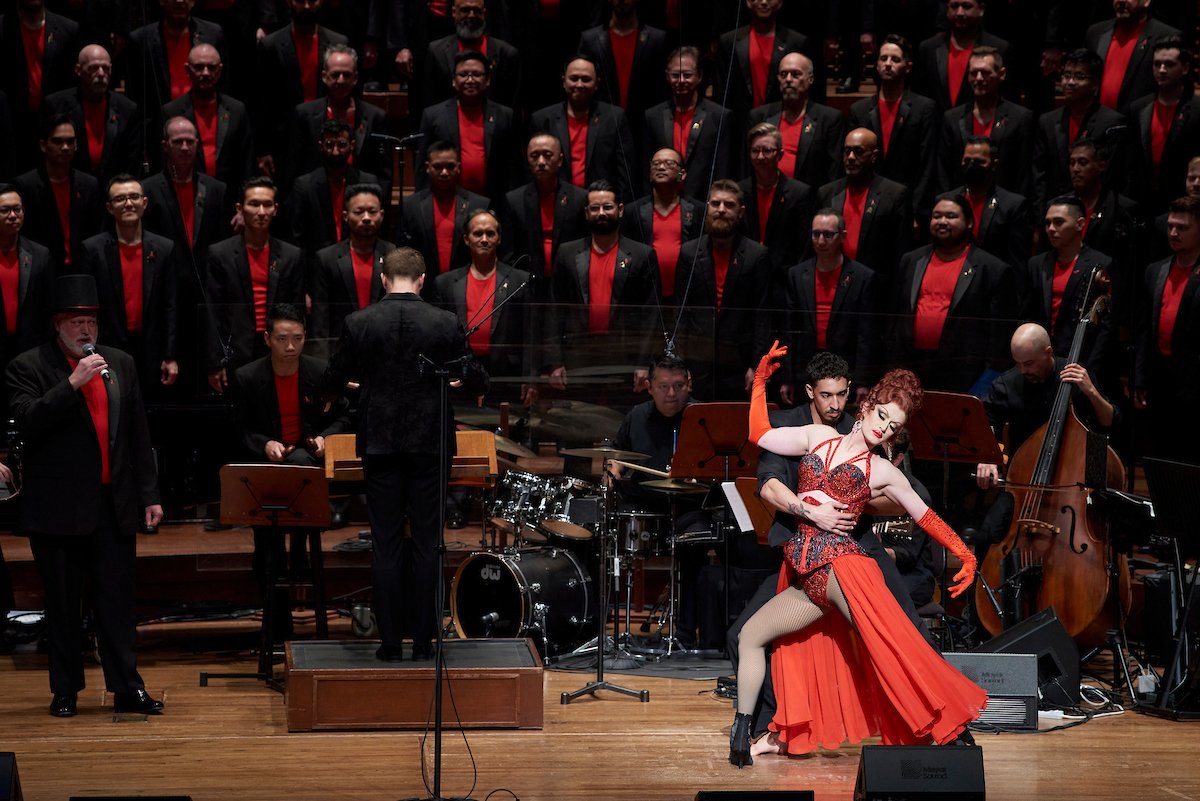
Music has the power to move our souls, but when voices unite in harmony, something truly special happens. It's a vibrant reflection of the LGBTQIA+ community itself – diverse identities, experiences, and triumphs woven together to create something beautiful and powerful. LGBTQ+ choirs and choruses do more than just perform; they amplify voices, inspire courage, and create spaces where everyone feels seen and celebrated.

Their music is a celebration of identity, a call for acceptance, and a reminder that we are stronger together. From grand concert halls to cozy community centers, these choirs build a sense of community and belonging through the simple act of singing. Let's explore some of the incredible LGBTQ choirs and choruses whose voices not only inspire but also embolden us to embrace our full, authentic selves.

  1. San Francisco Gay Men's Chorus (SFGMC)

The SFGMC isn't just one of the most renowned gay choruses in the world; it holds the distinction of being the first openly gay chorus in history. Founded in 1978, the chorus emerged from a time of both celebration and mourning for San Francisco's LGBTQIA+ community.

Following the assassination of activist Harvey Milk, a group of friends gathered to sing, seeking solace and a way to honor his legacy. This simple act of shared music blossomed into a powerful force for change.

The SFGMC became a beacon of resilience, using their voices to advocate for LGBTQIA+ rights and bridge divides through the unifying power of music.

2. Oakland Gay Men's Chorus (OGMC)

Founded in 1991, the Oakland Gay Men's Chorus (OGMC) reflects the East Bay's vibrant spirit – it's a melting pot of voices celebrating the beauty of the LGBTQIA+ community. They've faced challenges, even losing their rehearsal space in the tragic Ghost Ship fire, but their voices only rang out stronger. The OGMC believes music transcends boundaries, and their mission is to use their voices to build bridges of understanding.

3. Transcendence Gospel Choir

The Transcendence Gospel Choir, established in 2015, proves gospel music is for everyone! They challenge the idea that faith and queerness have to clash, offering a message of love and acceptance for LGBTQIA+ people seeking spiritual community. Transcendence Gospel Choir uses their powerful voices to spread harmony and healing, showing the world that inclusivity can be downright soulful.

4. Youth Pride Chorus (YPC)

The YPC, founded in 2008 and based in New York City, isn't just about singing; it's about empowering LGBTQIA+ youth to find their voice and use it to make a difference. Their music echoes through the streets, from local rallies to the steps of City Hall, proving that pride has a powerful soundtrack in the heart of NYC. YPC shows that the future of the LGBTQIA+ community is fearless, energetic, and bursting with creative energy.

5. The Queer Chorus of San Francisco (TQCSF)

If there’s a choir that embodies the vibrant spectrum of the LGBTQIA+ community, it's TQCSF! Founded in 2003, this chorus specifically welcomes trans and non-binary singers, celebrating diversity in everything from pronouns to pitch.

TQCSF isn't afraid to change it up – they've performed in languages from Hebrew to Swahili, proving music truly is universal! This chorus is a reminder that music is a powerful tool for building inclusion and celebrating the joy of singing your truth.

6. The Windy City Gay Chorus (Chicago)

Chicago's own Windy City Gay Chorus burst onto the scene in 1979, adding their harmonious voices to the city's rich legacy of activism. These talented singers aren't just about great music; they've used their platform for social justice since the beginning.

Ever heard of the "Lavender Line"? That massive 2017 equality march was backed by a chorus 300 strong from the WCGC! And talking about commitment: they've even performed at maximum security prisons, proving that the power of music knows no boundaries.

The Windy City Gay Chorus stands as a testament to the impact art can have on both hearts and minds.

7. Pink Singers (London)

Fancy a little trip across the pond? The Pink Singers have been singing proudly since 1983, making them one of Europe's oldest LGBTQIA+ choirs. This group paved the way for others to celebrate queer identities through music, inspiring the formation of LGBTQIA+ choirs across the continent.

They've performed for royalty AND at protests, proving that music can be both refined and revolutionary. The Pink Singers stand for a world where everyone can sing their truth, loud and clear.

8. New York City Gay Men's Chorus

Founded in 1980, the New York City Gay Men's Chorus emerged at a pivotal and heartbreaking moment for the LGBTQIA+ community. While a time of growing acceptance was dawning, the devastating AIDS crisis cast a long shadow. This chorus began as a source of solace for those mourning unimaginable loss. They sang to remember loved ones, to defy despair, and to demand action against a shattering epidemic.

Music became their form of healing and protest. They sang at hospital bedsides, offering comfort in the face of immense hardship, and raised their voices to educate the public about the crisis. Later, these same voices would fill Broadway theaters and the hallowed Carnegie Hall! The NYC Gay Men's Chorus is a testament to the resilience of the human spirit and the power of music to carry us from grief to triumphant celebration.

Beyond their star-studded performances, they're about breaking down stereotypes and championing social justice, showing that a chorus can be both glitter and grit.

9. Trans Chorus of Los Angeles

The Trans Chorus of Los Angeles (TCLA), founded in 2015, brings a powerful message of trans visibility and celebration to the West Coast. Mirroring the work of their San Francisco siblings, the TCLA offers a space of belonging and joyful self-expression for trans and gender-nonconforming singers.

Did you know they sometimes hold rehearsals via Zoom? Talk about using modern tools to foster community! This chorus believes in amplifying trans voices and using music to break down barriers.

10. Boston Gay Men's Chorus

As one of the oldest LGBTQIA+ chorus in the US, the Boston Gay Men's Chorus (BGMC) holds a special place in choral history. Founded in 1982, these singers broke down barriers in a city with a complex relationship with LGBTQIA+ rights.

From tackling social issues in their performances to founding life-changing outreach programs for LGBTQIA+ youth, this chorus isn't afraid to put their music where their convictions are. A proof of their impact? They performed in courtrooms as their state legalized same-sex marriage, showing that music can be part of changing history. Also, BGMC was the first Chorus chosen by Disney entertainment to premiere the groundbreaking “Disney Pride in Concert.”

***

These are only a few of the organizations that have spread choral music so passionately over the years. The legacy of these choirs and choruses extends far beyond their moving performances. They are inspiring the next generation, challenging long-held stereotypes, and proving that music can break down barriers. Their voices are a promise of a future where everyone, regardless of their sexual orientation or gender identity, can sing their truth with pride and joy. Support these incredible choirs – attend their concerts, spread the word about their work, and let their music fill you with hope and a renewed commitment to creating a more inclusive world for all.

Back to Blogs

San Francisco Music Venues: Safe Spaces for LGBTQIA+ Artists and Music Lovers

San Francisco holds a revered place in the history of LGBTQIA+ activism and artistic expression. With its legacy of celebrating diversity and challenging norms, the city has always been a beacon for queer individuals seeking a place to freely express themselves. Safe spaces where LGBTQIA+ artists can showcase their talents, build community, and feel a sense of belonging are essential. Fortunately, San Francisco's music venues play a crucial role in fostering these welcoming environments.

From the early days of trailblazers like Sylvester to today's inclusive landscape, music has been a powerful force for the LGBTQIA+ community. This tradition of music as a force for inclusion continues today. The city boasts a wide spectrum of venues catering to diverse tastes. Intimate pubs and gay bars host drag shows or live music in San Francisco, while dedicated music halls and theaters present concerts. While San Francisco exudes an overall LGBTQ+-friendly vibe, neighborhoods like SoMa and the Castro pulsate with an especially strong queer-centric energy – reflected in many of their iconic music spots in the Bay Area.

Check out these LGBTQIA+-friendly San Francisco music venues keeping the spirit alive:

Chan National Queer Arts Center

This dedicated arts hub spotlights the full spectrum of queer creativity, including an impressive range of musical performances. The Center's mission explicitly focuses on promoting LGBTQIA+ musicians and performers, providing visibility and a platform for diverse voices. Its spaces host everything from intimate concerts to larger-scale productions, all centered on queer artists and narratives. Its collaboration with the San Francisco Gay Men's Chorus (SFGMC) further strengthens its commitment to queer music.

SF LGBT Center

While this dynamic community resource serves many needs within the LGBTQIA+ community, its commitment to the arts includes a focus on music. Their "Queer Vibes and Vibin’ Live" program is a pillar of their musical offerings, serving as a platform for budding local LGBTQ+ singers, bands, and spoken word artists. The program highlights a new local LGBTQIA+ artist monthly, offering virtual performances that showcase fresh talent emerging from within the community. Additionally, the Center regularly hosts workshops and other music-focused events.

Queer Cultural Center

This multidisciplinary arts organization places social justice at its core, including a strong focus on showcasing underrepresented voices in the LGBTQIA+ community through music. They host regular open mic nights, welcoming everyone to share music, poetry, stand-up comedy, and storytelling. These inclusive events foster a sense of belonging. Their programming also features diverse musical genres and artists, with events ranging from intimate concerts to larger festivals like the National Queer Arts Festival, providing a powerful platform for LGBTQIA+ musicians.

Oasis

This glamorous nightclub and cabaret space is a San Francisco nightlife staple, known for its extravagant drag productions and energetic dance parties. Its commitment to inclusivity draws a diverse crowd, ensuring everyone feels comfortable to express themselves on the dancefloor. You'll find themed music nights, high-profile DJs, and performances celebrating LGBTQIA+ artists and culture.

El Rio

This laid-back gay bar in San Francisco radiates a welcoming, come-as-you-are vibe. Its popular outdoor patio sets the scene for a wide range of events, including queer dance parties, live music of various genres, and fundraisers for LGBTQIA+ causes. Over the years, El Rio has earned a solid reputation as a safe space where patrons can let loose and connect with the community.

Bottom of the Hill

This beloved indie rock institution holds a special place in the hearts of music lovers. Its stage has hosted countless LGBTQIA+ artists, fostering a diverse and accepting crowd. Bottom of the Hill isn't exclusively dedicated to queer music, but it's known for being a space where everyone, regardless of orientation, can come together to enjoy great music in a welcoming atmosphere.

The Chapel

This unique live music venue, housed in a converted mortuary, offers a captivating backdrop for live music. Their varied programming attracts a mixed crowd of mostly locals, including LGBTQIA+ patrons. Whether it's a major concert or a local showcase, The Chapel's historic charm creates a unique atmosphere for any performance.

Rickshaw Stop

This eclectic venue embraces a wide range of musical styles, curating events that appeal to diverse tastes. They regularly host special nights dedicated to specific genres or artists. From established acts to up-and-coming musicians, Rickshaw Stop provides a platform for artists to share their work and for audiences to discover new favorites.

Cafe du Nord

This historic venue oozes charm, creating an intimate setting for live music. They showcase a mix of musical genres, providing a platform for emerging artists to connect with an audience. Music lovers can discover a variety of talented performers at Cafe du Nord.

Thee Parkside

This long-standing neighborhood bar draws a laid-back, mixed crowd with a strong lesbian following. It's a popular spot for those seeking classic drinks and live music in San Francisco with a rock-and-roll edge. Their stage regularly features local bands, providing a platform for both established and emerging musicians in the area.

Martunis

This beloved institution is known for its classic cocktails and its welcoming atmosphere, making it a popular destination for the LGBTQIA+ community. Their regular musical events, including popular piano sing-alongs, invite patrons to join in for a lively and communal music experience.

Boom Boom Room

This historic San Francisco music venue has a strong legacy in the Blues music scene and is a well-known safe space for LGBTQIA+ patrons. Hosting both local acts and legendary performers, it offers a vibrant setting and a dedicated stage where blues enthusiasts can gather and enjoy the iconic sounds of this genre.

Blush

This cozy, European-inspired wine bar creates a sophisticated yet welcoming space for LGBTQIA+ patrons and allies. They offer an impressive selection of wines alongside live music events, making it a great choice for a relaxing evening with a touch of music and good company.

SF Eagle

The SF Eagle is a legendary gay bar with a rich history. Established in 1981, it's known for its iconic "Leather" vibe and was an early space for a more masculine expression within the LGBTQ+ community. Over the years, the SF Eagle has become a community hub, symbolizing resilience and welcoming a diverse crowd. While mainly a bar, they occasionally host DJ nights and live music events on Thursdays.

How You Can Support These Venues and Become an Ally

  • Attend shows and events: Discover new artists, dance with friends, and celebrate the diversity of the LGBTQIA+ music scene.

  • Spread the word: Share your experiences on social media, tell your friends, and help these venues reach a wider audience.

  • Consider donating or volunteering: Many of these venues are operated by nonprofits or dedicated individuals. Your contributions can make a real difference.

  • Learn and listen: Creating safe spaces goes beyond simple attendance. Take time to understand the history and experiences of the LGBTQIA+ community.

  • Speak up: Challenge homophobia and transphobia when you encounter it. Your voice matters in creating a more inclusive world.

  • Educate yourself: Explore resources and organizations that support LGBTQIA+ rights and artists.

  • Do your research: Find out about LGBTQIA+-friendly music venues in your own community. Your support can make a difference beyond San Francisco.

  • Amplify their voices: Promote these spaces on your social media and help them grow their audience.

Remember, building a vibrant and inclusive music scene takes effort from everyone. By supporting these San Francisco music venues, being an active ally, and inspiring others to do the same, you can make a positive impact on the lives of LGBTQIA+ artists and music lovers everywhere.

Back to Blogs

Agender Pride Day: Exploring Gender Diversity in Music

May 19th is Agender Pride Day and we are honoring those who identify outside the traditional gender binary, embracing the beautiful spectrum of human experience. Fender has often been presented as a rigid choice, but the reality is far more vibrant. Gender exists on a vast spectrum, encompassing endless possibilities for self-expression and identification.

Music has always served as a powerful tool for exploring identity. It can be a haven for introspection, a platform for bold self-expression, and a bridge to connect with others who share similar experiences. But for agender individuals, music holds a particularly potent significance. It becomes a tool for challenging societal expectations, carving out space for authentic identities, and fostering a sense of community through shared understanding.

So, to celebrate Agender Pride Day, we're throwing a spotlight on those amazing artists boldly challenging gender norms through their music. We'll explore how music empowers agender people and why it's so important to see diverse gender identities reflected in the art we love.

What does "Agender" mean?

The term 'agender' refers to individuals who do not identify with any specific gender. This can mean experiencing a lack of gender identity entirely or having a gender identity that falls outside the traditional binary of male and female. It's crucial to remember that 'agender' is not synonymous with being genderless or having no gender at all. Agender individuals can have a strong sense of self, but they simply don't resonate with societal gender categories.

Agender falls under the broader umbrella of non-binary identities. Here's what that means:

Non-binary: This term encompasses a wide range of gender identities that fall outside the rigid categories of male and female. Individuals who identify as non-binary may experience their gender as a mix of male and female, as neither, or as a unique identity entirely.

So, what is the difference between agender and non binary? Agender is a specific type of non-binary identity. While all agender individuals are non-binary, not all non-binary people identify as agender. Non-binary is an umbrella term, allowing for more nuanced experiences of gender identity.

Gender expression is deeply personal. While the term 'agender' resonates with many, others might use different language to describe their experiences. Some may prefer terms like 'gender neutral,' 'gender fluid,' or create their own unique labels. There is no single "right" way to be agender.

Regardless of the specific term used, the most important principle is to respect an individual's right to self-identify. Always use the correct pronouns and terms that feel most authentic and affirming to the person you're speaking with or about. Many agender individuals prefer gender-neutral pronouns like "them/they", but it's always best to ask individuals directly how they'd like to be referred to.

Trailblazing Agender and Non-Binary Artists in Music

Throughout history and in today's musical landscape, agender and non-binary artists offer unique and profound expressions of gender identity through their artistry. They shatter expectations and expand what music can represent. This Agender Pride Day, let's spotlight a few of these groundbreaking musicians:

  • Genesis P-Orridge (Throbbing Gristle): A pioneer in experimental and industrial music, P-Orridge embraced the concept of 'pandrogeny' – a blurring of traditional gender boundaries.

    "I am a gender abolitionist, because I believe gender is one of the major traps, snares that society and culture use to control behavior,"

  • Shamir: Known for a genre-bending sound and mesmerizing countertenor voice, Shamir identifies as non-binary.

    “I’m not cisgender, I’m not binary, trans/ I don’t wanna be a girl, I don’t wanna be a man/ I’m just existing on this godforsaken land,” they sing in the song "On the Regular."

    This lyric beautifully captures the experience of existing outside the gender binary.

  • Dua Saleh: This Sudanese-American artist's music blends hip-hop, spoken word, and influences from their heritage. As a non-binary person, they bring a powerful voice to issues of social justice and marginalized identities.

    "I was suffering with depression because I wasn’t being honest with myself about my non-binary identity. My gender dysphoria made me anxious – I was constantly being referred to as a woman and it was extremely triggering. As my music emerged, I found it soothed me. Music was and continues to be my saviour."

    - Saleh affirms in an interview with Attitude UK.

  • G Flip: This Australian pop singer-songwriter makes catchy and relatable music, openly embracing their non-binary identity.

    "If strawberries were girls and blueberries were boys and you put them in a blender, you'd get a gender smoothie. I am a gender smoothie" G-Flip tweeted.

  • Angel Haze: This rapper's music is known for its raw emotion and introspective lyrics. Open about her being an agender person, Angel Haze's artistry advocates for authenticity and challenges social norms.

    “I don't care what people call me. If they wanted to use the word he the entire article I would be ok with that... I don't allow gender to guide or manipulate anything that I am interested in,” Haze said in an interview with CBS.

  • Janelle Monae: A true chameleon of music and style, Monae identifies as pansexual and non-binary.

    "Being a queer black woman in America [...] someone who has been in relationships with both men and women – I consider myself to be a free-ass motherf*****," they proclaim.

Music as a Tool for Exploration, Empowerment, and Solace

Music speaks a language the soul understands, a language of feeling that transcends words. It makes us feel seen and understood. For many agender people, this power takes on an almost magical quality. In a world that often tries to force us into boxes, music lets us explore who we are without limitations.

It offers a refuge where complex emotions are not only accepted but celebrated. Songs can become a mirror reflecting our strength, a battle cry when we need courage, and a warm hug in moments of vulnerability. For the agender community:

Music becomes salvation and comfort…

The world can be an overwhelming and sometimes unwelcoming place for agender people who don't fit neatly into societal gender expectations. Music becomes a refuge, a safe space where complex emotions find a place to exist without judgment. Songs expressing vulnerability, yearning, or defiance can become a lifeline, offering understanding and solace.

Music becomes anthems of self-acceptance…

It gives voice to complex emotions and experiences. Songs about self-love, defiance of societal norms, and the beauty of existing outside the binary become deeply personal anthems. They offer affirmation in the face of potential isolation or misunderstanding.

Music challenges expectations through experimentation…

Agender artists often use their music to break boundaries and shatter stereotypes about what music should sound like. By blending genres, pushing expectations, or defying traditional gender roles within their music, they challenge the way we think about gender and creativity itself.

Music builds community and offers representation…

Agender individuals often haven't seen themselves accurately reflected in mainstream music. When they discover artists who express similar experiences, it creates a profound sense of community. The knowledge that someone else understands those feelings provides support, validation, and a sense of belonging in a world that can feel isolating. This representation can be life-changing, especially for young people questioning their gender identity.

The Importance of Visibility and Representation

Imagine growing up and never quite seeing yourself reflected in the music you love. Mainstream songs are filled with 'he' and 'she' pronouns, with love stories that don't seem to fit your experiences. Music should soundtrack your life, but instead, it feels like an echo chamber of expectations you can't fulfill. This is the reality for many young agender and non-binary people.

That's why the visibility of these artists is so revolutionary. When an agender artist steps into the spotlight, they become a beacon. They are not just creating incredible music; they are rewriting the narrative of what is possible.

Their mere presence shatters the illusion of only two acceptable ways to be. Their music speaks a language those who question their own gender understand in their bones.

These artists become more than just musicians – they become role models. They provide tangible proof that you can be agender or non-binary and thrive. You can express yourself boldly, find love on your own terms, and build a creative life overflowing with joy and authenticity. This kind of representation is life-changing, especially for a young person desperately seeking a reflection of themselves in the world.

Above all else, these artists create a sense of community. For those who have felt profoundly alone, stumbling across an artist who understands, who echoes your experiences back at you through their music, is a revelation. It's the realization that there are others out there, that you belong, and that the way you feel has a name.

The presence of agender and non-binary musicians expands the possibilities of what music looks and sounds like. More importantly, it sends ripples of change far beyond the stage, creating a world where everyone feels the freedom to authentically be themselves and embrace the full spectrum of their identity.

***

Agender Pride Day serves as a reminder of the vibrancy that emerges when we embrace the full spectrum of human experience. But let's not confine this celebration to a single day. Instead, let's actively seek out the voices of agender, non-binary, and all LGBTQIA+ artists all year round.

Let's discover new music, share their stories, and perhaps find a new favorite band at their next local show. By making support an ongoing practice, the music world becomes a place where everyone feels like they can step into the spotlight and share their unique song. Let's make every day a celebration of the power of music to uplift, empower, and reflect our beautifully diverse world.

Melodies of Protest: 5 LGBTQIA+ Anthems That Fueled Activism

Credits to: moisexgoro

From picket lines to Pride parades, music has been the heartbeat of the LGBTQIA+ rights movement. It's a rallying cry, a lament, and a joyous declaration of identity. Songs have the power to unite, inspire, and give a voice to our struggles and triumphs. The fight for LGBTQIA+ equality is far from over, but music has been there every step of the way, providing a soundtrack of both defiance and hope.

In the journey toward justice and equality, certain songs have risen above the rest, becoming anthems of the LGBTQIA+ rights movement. These melodies of protest have rallied individuals together, captured moments in time, ignited movements, and offered solace when words failed.  

Here are five iconic songs that have resonated across generations, from the classics that have stood the test of time to contemporary ballads that capture the ongoing struggle for equality. These songs remind us that every voice, whether sung or spoken, matters in the march toward justice. Join us as we celebrate the artistry, courage, and message of solidarity woven into each of these tracks.

1. I Will Survive by Gloria Gaynor

Initially released in 1978 as a B-side, "I Will Survive" quickly morphed from a disco-era breakup song into something far greater. Its themes of overcoming adversity and finding inner strength resonated deeply with the LGBTQIA+ community, particularly during the devastating AIDS crisis of the 1980s. The song transformed into an anthem of defiance, perseverance, and a celebration of life in the face of immense hardship.

"I Will Survive" gave voice to the pain, anger, and ultimately, the unwavering spirit of those fighting for survival, both physically and in the battle for respect and dignity. It is a timeless reminder that even in the darkest hours,  there's a well of strength within us all,  enabling us to rise up and carry on.  Its legacy within LGBTQIA+ activism and culture is undeniable, remaining a vibrant source of empowerment and community pride.

2. Smalltown Boy by Bronski Beat

With its pulsating synth-pop intro and melancholic lyrics, "Smalltown Boy" became an iconic hit of the 1980s. Beyond its catchy melody, it tells a poignant story of a young gay man fleeing his hometown due to rejection and prejudice.  Lead singer Jimmy Somerville's falsetto vocals convey a heartbreaking mix of isolation, vulnerability, and a yearning for a place where he can belong.

This song resonated deeply with countless LGBTQIA+ individuals, particularly those growing up in unaccepting environments.  It shed light on the pain of ostracism and the courage it takes to leave in search of a community where one can be authentically themselves.  "Smalltown Boy" remains a powerful reminder of the struggles faced by many queer youth and the enduring importance of finding places of acceptance and support.

3. Born This Way by Lady Gaga

Remember when "Born This Way" dropped in 2011? It felt like a thunderbolt of pure, unapologetic joy. Its message that everyone – regardless of race, sexual orientation, or gender identity – is beautiful just as they are was a powerful statement.  Lady Gaga, already a fierce advocate for LGBTQIA+ rights, turned this song into a battle cry for acceptance and self-love.

"Born This Way" came at a time of growing visibility for the LGBTQIA+ community. Yet, so many, especially young people, still faced bullying and struggled to find their place.  

Hearing Gaga belt out those lyrics of radical self-love felt like a lifeline. It was permission to embrace yourself boldly and proudly. It was the ultimate gay anthem blasting off every dance floor in the world. 

Gaga's commitment to the cause extended beyond the song itself. She founded the Born This Way Foundation, which focuses on youth empowerment, anti-bullying initiatives, and creating a kinder, braver world.  Her artistry and activism have helped "Born This Way" become more than just a song; it's a movement.

4. Same Love by Macklemore & Ryan Lewis feat. Mary Lambert

In 2012, hip-hop duo Macklemore & Ryan Lewis released "Same Love," a powerful and timely anthem championing marriage equality and broader LGBTQIA+ rights. It's release felt like a turning point. Hearing a mainstream hip-hop duo tackle homophobia and champion LGBTQIA+ rights so boldly was groundbreaking. The song's heartfelt lyrics spoke to the simple truth: love is love, and everyone deserves the same rights.

"Same Love" was particularly impactful because it came from mainstream artists in the hip-hop world. It pushed conversations about equality into broader public discourse and became a rallying cry during campaigns for marriage equality. Mary Lambert's contributions and her later solo release, "She Keeps Me Warm", further amplified the song's message and promoted visibility for queer women in music.

5. Beautiful by Christina Aguilera

Christina Aguilera's "Beautiful" is that song you belt in the shower when you need a good cry or self-esteem boost. Her powerful vocals carry a message of self-acceptance, reminding us that our worth isn't defined by what others think. The lyrics feel like a reassuring hand on your shoulder, reminding you that you're amazing just the way you are.

What made "Beautiful" even more impactful was its music video. Seeing a diverse range of people, including LGBTQIA+ individuals, portrayed in such a positive light was a powerful statement.  It challenged stereotypes and helped viewers feel seen and understood.  Christina Aguilera's consistent support for the LGBTQIA+ community makes "Beautiful" an anthem that reminds us of the transformative power of acceptance and self-love.

***

Let these LGBTQ songs be your soundtrack – through celebratory moments, times of hardship, and throughout your journey of self-discovery. There's a power in finding music that mirrors your experiences.

The San Francisco Gay Men's Chorus (SFGMC) believes in this power of shared voices. That's why we sing – to uplift, to advocate, and to create a vibrant community where everyone can feel seen, heard, and celebrated. Support our mission of community building through music by experiencing the joy of a live SFGMC concert, donating, following us on social media, or simply sharing our message of inclusion and acceptance. Together, we can make the world a more harmonious and accepting place for all.

Queer Women in Music: Pioneers, Iconoclasts, and Trailblazers

Music has the uncanny power to speak what words often cannot. It's a powerful form of expression, telling stories of love, struggle, joy, and pain.  For queer women throughout history, music has been more than just entertainment; it's been a lifeline, a sanctuary for self-expression, and a defiant act of existence in a world that often tried to silence them.

From the coded lyrics whispered in smoky blues clubs to the anthems of love and acceptance, and liberation blasting from festival stages, queer women have continuously enriched the musical landscape. Their artistry has transgressed boundaries, shattered stereotypes, and paved the way for generations to boldly claim their space.  They are pioneers, iconoclasts, and unwavering trailblazers.

Let's celebrate the audacity, creativity, and undeniable impact of these queer artists who have shaped the music we cherish and continue to push the boundaries of representation.

The Pioneers

In the smoky depths of early 20th-century blues clubs, a coded language of desire and defiance emerged. Blues music, with its roots in the Black American experience, provided a rare space for nuanced self-expression. For queer women artists, the blues offered a unique opportunity to subtly weave their truths into the fabric of their songs.

  • Trailblazers:

    • Ma Rainey: Known as the "Mother of the Blues," her powerful vocals and openly suggestive lyrics hinted at same-sex desires.

    • Bessie Smith: Dubbed the "Empress of the Blues," she embodied a spirit of fierce independence and embraced themes of female autonomy and longing.

    • Gladys Bentley: A gender-bending performer, known for her cross-dressing and suggestive blues performances that challenged norms of her era.

    • Alberta Hunter: Though more discreet in her lyrics, her songs often portrayed complex female relationships with coded language.

The world these women inhabited was steeped in rigid social expectations and outright condemnation of non-heterosexual identities. To exist openly as queer artists was an act of extraordinary courage. The mere suggestion of queerness could endanger their careers and personal lives. Yet, through their music, they found ways to subtly convey their experiences and identities. 

Their music became a subtle rebellion, a way to articulate love and desire that society forced them to keep hidden. Double entendres, veiled references, and shifting pronouns within their lyrics hinted at their authentic selves, creating a lifeline of connection for those who understood and could read between the lines. 

Voice of Rebellion: The Iconoclasts

As the mid-20th century unfolded, societal changes, notably the rise of second-wave feminism, began to challenge traditional gender roles and expectations. This era of questioning and upheaval provided fertile ground for artists to use their music and platforms as powerful tools of rebellion and social commentary. Queer women musicians, in particular, seized this moment to break free from the confines of societal norms, using their artistry to forge new narratives and demand visibility and acceptance for LGBTQIA+ identities.

  • Janis Joplin: Her raw, bluesy vocals and electrifying stage presence shattered expectations of female performers, embodying both vulnerability and unbridled power. 
    Songs to check out: "Piece of My Heart", "Me and Bobby McGee"

  • Joan Jett: A rock and roll icon who fiercely challenged gender norms, both with her music and her unapologetic androgynous style. 
    Songs to check out: "I Love Rock 'n' Roll" and "Bad Reputation."

  • Melissa Etheridge: Her powerful anthems in the 1990s helped give visibility to lesbian identity within mainstream music. 
    Songs to check out: "Come to My Window", "I'm the Only One."

  • Tracy Chapman: With her insightful lyrics addressing social injustice and personal struggles, she resonated with audiences marginalized by race, gender, and sexuality. Songs to check out: "Fast Car" and "Talkin' Bout a Revolution."

  • k.d. lang: Her open lesbian identity and genre-defying music, blending elements of country and pop, challenged mainstream expectations. 
    Songs to check out: "
    Constant Craving", "Miss Chatelaine."

These queer artists became icons not just for their musical talent but for their audacity in defying societal norms.  Their music confronted sexism, homophobia, and rigid expectations of femininity. With every powerful note and fearless lyric, they carved out a space for queer women to be seen, heard, and celebrated on their own terms. They pushed boundaries, sparked conversations, and paved the way for generations of LGBTQIA+ artists to find their own voices.

Today's Trailblazers

The legacy of earlier generations of queer women artists has created a more open and accepting landscape for today's trailblazers. Increased visibility and greater artistic freedom have allowed for a vibrant and diverse symphony of queer female voices to permeate the music industry. These artists serve as sources of inspiration and catalysts for change, challenging stereotypes and fostering a more inclusive environment. Here are some out and proud queer women who are making significant impacts across various music genres:

  • King Princess: If you're looking for catchy pop anthems that playfully capture the messiness and beauty of modern queer love, King Princess is your girl.

  • Brandi Carlile: There's nothing quite like Brandi Carlile's voice soaring over heartland-rock melodies. Her music offers an honest and moving portrayal of her experiences as a queer woman.

  • Kehlani: Kehlani's R&B music is the soundtrack to healing heartbreak and reclaiming your power. She weaves authenticity into every song, celebrating her queer identity without holding back.

  • Arlo Parks: For those quiet, introspective moments, the singer-songwriter's indie-folk music offers a tender embrace. Her songwriting explores the nuances of young queer love with both raw vulnerability and gentle yearning.

  • St. Vincent: When you want something bold and unapologetically different, St. Vincent delivers. She smashes genres together, her music a playground of experimentation, all while exploring desire, sexuality and power dynamics.

  • Tegan and Sara: These Canadian sisters are indie-music icons for a reason! Their catchy melodies and relatable lesbian songs have been a soundtrack for growing up queer, exploring themes of love, heartbreak, and self-discovery.

  • Halsey: Halsey's refusal to fit in a box resonates with anyone who's ever felt like an outsider. Her music boldly challenges expectations, exploring bisexuality, mental health, and the search for self-acceptance.

These contemporary queer artists go beyond creating incredible music; they leverage their talent and platforms to champion causes close to their hearts. They advocate for LGBTQIA+ rights, mental health awareness, and intersectional feminism.  Through their work, they challenge stereotypes, spark conversations, and create a sense of community for those seeking belonging and representation.

The Power of Visibility and Representation

The music of queer women artists is more than just entertainment; it's a lifeline, a mirror, and a battle cry. For younger generations discovering their identities, these artists offer powerful role models, showing that living openly and authentically is possible. Their LGBTQ songs become anthems of self-acceptance, reminding listeners that they are not alone in their experiences.

Music has the unique ability to forge a sense of belonging.  Concerts become safe spaces where queer women, and all those who resonate with their message, can find community and celebrate their identities without judgment.  Their music creates a shared language, expressing the joy, pain, and complexities of the queer experience in a way that transcends words.

The San Francisco Gay Men's Chorus (SFGMC) understands the profound impact music can have. We embody the power of visibility, using our voices to create a more inclusive and accepting world. Like the pioneering queer women artists who came before us, we leverage our platform to amplify marginalized voices, promote understanding, and create a vibrant, joyful community built on the principles of artistic excellence and social justice.

The Soundtrack of Resistance: Music and the 1980s AIDS Crisis

The year is 1981.

Disco beats pulsate in nightclubs, neon lights paint the streets, and a new wave of optimism washes over the world. It was a time of progress, change, and the promise of a brighter future. But beneath the surface, a silent threat emerges.

A mysterious illness begins to strike, claiming victims with alarming speed. Fear and confusion grip communities, particularly those on the fringes, as a mysterious illness, initially called GRID (Gay Related Immunodeficiency Disease), begins to spread, striking down young, healthy men with alarming speed.

Whispers of a "gay plague" ignited panic, fueled by misinformation and a lack of understanding. Marginalized communities, particularly gay men and people of color, faced the brunt of the crisis, ostracized and blamed for the disease.

With information scarce, misinformation rampant, and the medical community struggling to understand the virus, discrimination, and stigma spread even faster than the disease itself.

Uncertainty hung heavy in the air, and the silence was deafening. Not just in the clubs but in the media, government pronouncements, and hushed conversations behind closed doors. This suffocating silence bred despair and isolation, leaving a desperate need for answers and a community yearning to be seen and heard.

Yet, amidst the despair, a powerful counter-narrative emerged. Artists, musicians, and activists found their voices, using music to challenge the silence, shatter stigma, raise awareness, and demand justice.

Music, that universal language, became a lifeline for a community grappling with loss, fear, and the desperate need to be seen and heard. It offered a platform for expressing their frustration. It became a tool for education, awareness, and, most importantly, a call to action.

From such desperation rose the "Soundtrack of Resistance" — a testament to the enduring power of music in the face of adversity. From disco beats to anthemic rock, from heart-wrenching ballads to empowering dance anthems, each song became a story of courage, defiance, and the unwavering fight for justice and equality.

This is the dawn of the 1980s AIDS crisis in the United States, a defining chapter in human history that forever changed the landscape of healthcare, social justice, and, yes, music.

Government Response to the 1980s AIDS Crisis

Initial Inaction and Delayed Response

The onset of the AIDS crisis was met with notable silence and inaction from government officials. Early cases reported in 1981 received little attention, leading to a lack of public awareness and understanding. This period of inactivity persisted despite increasing death tolls and calls for action from affected communities.

It wasn't until the mid-1980s that the federal government began to acknowledge the crisis, with President Reagan publicly mentioning AIDS for the first time in 1985. This delay in response contributed to the rapid increase of AIDS cases and exacerbated the stigmatization of those affected, particularly within the LGBTQ+ community and among intravenous drug users.

The lack of early federal funding and guidance from the Centers for Disease Control and Prevention (CDC) meant that crucial time was lost in the fight against the spreading epidemic.

Shift Toward Acknowledgment and Action

Pressure from activists and the growing public health crisis eventually prompted a shift in government approach toward AIDS. By the late 1980s, funding for AIDS research and support services began to increase, though many activists criticized it as too little, too late.

The establishment of the President's Commission on the HIV Epidemic in 1987 and the passage of the Ryan White CARE Act in 1990 marked significant, though belated, governmental engagement with the AIDS epidemic. These efforts aimed to improve public education, support research, and provide care for those infected with HIV/AIDS, reflecting a more proactive government stance in the face of ongoing criticism for earlier failures.

The Rise of Musical Activism

In the face of government inaction and widespread societal stigma during the 1980's AIDS epidemic, '80s music emerged not only as a beacon of hope but also as a formidable form of protest.

Fear and stigma initially silenced many, but musicians and artists soon shattered the silence, courageously using their voices and platforms to draw attention to the crisis, fight for research, and support those facing incredible adversity.

Benefit concerts, such as the groundbreaking Live Aid and the passionate Red Hot + Blue project in the early 90s, united musicians of every genre and harnessed the global reach of pop culture. Here, music wasn't merely entertainment; it became a catalyst for both fundraising and a critical shift in awareness.

Pop superstars like Elton John, Madonna, George Michael, and the band Queen were among the first to break the silence about AIDS. With their massive global reach, they brought vital awareness to the crisis.

Elton John, deeply impacted by the loss of friends–including teenage HIV-positive patient Ryan White – established the Elton John AIDS Foundation, raising millions for care and research. Queen's lead singer, Freddie Mercury, while living with HIV/AIDS himself, performed an unforgettable set at Live Aid in 1985, mere months before his tragic passing. His legacy became a rallying cry for action.

Openly LGBTQ+ musicians like Sylvester, Bronski Beat, and others broke ground by bringing their experiences and activism to the forefront of their music. They created safe spaces of expression and defiance in a time of intense isolation. Even outside the mainstream, punk bands, folk singers, and smaller acts found the courage to use their voices and concerts to challenge stigma and fundraise for those impacted.

Protest Power: When Music Fuels the March

While star-studded events drew global attention, it was everyday people in grassroots movements like ACT UP (AIDS Coalition to Unleash Power), where music served as the emotional, motivating soundtrack of their vital, organized fight. Protests and defiant marches drew directly on the soundtrack of activism to rally crowds, channel rage and desperation, and transform the streets into platforms.

Slogans became chants, repurposed protest classics provided motivation, and songs of both anger and hope were weapons of dissent. In a time when governments ignored a pandemic, this collective cry through music became impossible to ignore.

Songs that Fueled the 1980s AIDS Crisis

Music served as a rallying cry and a form of solace for those affected by the AIDS crisis in the 1980s. Several songs emerged as anthems of the movement, capturing the anguish, defiance, and hope of the era. Here are 10 notable examples:

  • "That's What Friends Are For" by Dionne Warwick and Friends: This heartfelt ballad, released in 1985, became a symbol of solidarity and support for those battling AIDS. It raised awareness and funds for AIDS research.

  • "I Will Survive" by Gloria Gaynor: Originally released in 1978, this disco anthem took on new meaning during the AIDS crisis, empowering individuals to persevere in the face of adversity. Its message of resilience resonated deeply with the LGBTQ+ community.

  • "People Have the Power" by Patti Smith: Released in 1988, this anthemic track urged listeners to recognize their collective power to effect change. Its impassioned lyrics inspired activism and solidarity within the AIDS community and beyond.

  • "And the Band Played Waltzing Matilda" by The Pogues: This haunting folk song, originally written by Eric Bogle, poignantly captured the devastation of war. In the context of the AIDS crisis, its themes of loss and remembrance took on added significance.

  • "I Want to Break Free" by Queen: An iconic anthem of individuality and breaking free from societal expectations, this Queen song resonated with those facing discrimination and prejudice during the AIDS crisis.

  • "Smalltown Boy" by Bronski Beat: This synth-pop hit addressed the struggles of a young gay man coming to terms with his identity. Released in 1984, it became an anthem for LGBTQ+ individuals facing discrimination and isolation.

  • "True Colors" by Cyndi Lauper: Released in 1986, this empowering ballad took on added significance during the AIDS epidemic. Cyndi Lauper's advocacy work aligned with the themes of resilience and acceptance conveyed in "True Colors."

  • "You Make Me Feel (Mighty Real)" by Sylvester: An openly gay artist, Sylvester's music provided a safe space for expression and activism. This disco hit became a symbol of LGBTQ+ pride and resilience.

  • "Like a Prayer" by Madonna: Madonna's controversial yet impactful song addressed themes of faith, love, and social injustice, making her a vocal advocate during the AIDS crisis.

  • "Jesus to a Child" by George Michael: Although not explicitly about AIDS, this poignant ballad by George Michael took on added significance during the epidemic, becoming a reflection on loss and remembrance.

Legacy and Continuing Influence

The music that emerged in response to the 1980s AIDS crisis did far more than provide a soundtrack for a dark chapter in history; it sowed the seeds of resilience, awareness, and activism that continue to bear fruit today.

The legacy of this era is not confined to the past but resonates profoundly in the present, influencing new generations of artists and activists committed to the ongoing fight against HIV/AIDS and the pursuit of LGBTQ+ rights.

Enduring Echoes of Activism

The poignant melodies and defiant anthems of the '80s music have left an indelible mark on HIV/AIDS awareness and LGBTQ+ rights activism. They served as powerful tools for education and empathy, breaking down barriers of fear and prejudice at a time when misinformation about AIDS was rampant.

Today, the progress in treatment and the shift in societal attitudes towards those infected with HIV/AIDS and the LGBTQ+ community can be partly attributed to the relentless activism of this era, in which music played a pivotal role.

Inspiration for a New Generation

Contemporary artists across genres continue to draw inspiration from the musicians who used their voices and platforms to combat the AIDS crisis. This influence is evident not only in the thematic content of modern music but also in the way artists today engage with social and political issues.

Musicians like Lady Gaga, Sam Smith, and Frank Ocean, among others, embody the spirit of advocacy and visibility, using their work to address issues of identity, rights, and acceptance, much like their predecessors did.

These artists, and many others, stand on the shoulders of giants—those who bravely used their art to demand change and support the marginalized. By incorporating themes of love, loss, resilience, and resistance into their music, they honor the legacy of the 1980s while propelling the conversation forward in their unique context.

Ongoing Tributes and Projects

The commitment to remembering those lost to AIDS and continuing the fight against the virus is evident in ongoing musical events and projects. Annual events like the Life Ball in Vienna and various World AIDS Day concerts around the globe blend commemoration with activism, raising funds and awareness for AIDS/HIV prevention and treatment. The Red Hot Organization, since its inception, has continued to release projects that bridge music and activism, engaging new artists in the fight against AIDS.

Music as a Timeless Tool for Change

History offers a powerful reminder: Music can transform apathy into action, sorrow into strength, and a whisper into a powerful chorus. Throughout the 1980s AIDS crisis, artists courageously defied silence, turning heartbreak into anthems of resilience, demands for progress, and a call for compassion the world could not ignore.

While the struggles depicted in their songs persist, the torch of music as a vehicle for activism burns bright. Whether through legacy initiatives keeping the "Soundtrack of Resistance" alive or in the work of modern artists using their voices to champion equality, every new song of defiance becomes part of a powerful, evolving soundtrack. This musical lineage reminds us that change won't come readily; it requires voices willing to be bold, loud, and persistent until injustice has no place to hide.

The fight continues. Find artists and organizations whose music fuels courage and supports ongoing efforts to address HIV/AIDS. Seek out concerts, playlists, and online communities where diverse voices unite in song–it becomes an act of solidarity.

Share what moves you, and amplify the voices of others. Each time we sing out, we become part of that unbroken chorus for a brighter, more just world where music is both a battle cry and a celebration of unity.

Must-see LGBTQIA+ Music Shows in San Francisco on April 2024

Get your calendars out and start circling dates, because we've lined up the best LGBTQIA+ music shows in San Francisco this April! We're talking cabarets, film screenings, and everything in between. This isn't just about having a good time (although those are guaranteed!). These events are all about finding your tribe, celebrating who you are, and standing up for what you believe in.

Check out our favorite San Francisco events in April below. They're sure to make you feel proud, connected, and totally inspired.

1. THEYFRIEND Nonbinary Cabaret: April Edition

When: Thursday, April 18, 2024 At 7:30pm

Where: Brava Theater Center, San Francisco

If you loved the THEYFRIEND Festival, this cabaret is your chance to keep the celebration going year-round. April's lineup is packed with powerhouse performers, including comedian Vin Seaman, drag artist Jota Mercury, the mesmerizing music/video fusion of Xtra.dae, and poet Alder Duan Hurley.

2. The Pride Of Lions (World Premiere!)

When: March 28th - April 21st, 2024

Where: Theatre Rhinoceros, Castro District, San Francisco

Nonbinary playwright Roger Q. Mason sheds light on a pivotal moment in LGBTQIA+ history with "THE PRIDE OF LIONS." Based on the 1928 arrests of female impersonators working on Mae West's "The Pleasure Man," this immersive production reveals the persecution faced by early queer artists.

The Pride of Lions takes you into their jail cell the night they're arrested for performing in a groundbreaking play. This diverse group of drag queens and trans women are defiant, funny, and determined to live their truth. Their story is a fight for respect, a celebration of identity, and a powerful reminder that LGBTQIA+ people have always existed, creating art and making a difference, even in the face of oppression.

3.Gay Chorus Deep South (Film Screening)

When: Thursday, April 11 AT 7:00 PM

Where: The Chan National Queer Arts Center, San Francisco

Witness the power of music to bridge divides in this 5th Anniversary screening of the acclaimed documentary, "Gay Chorus Deep South." Following the 2016 elections, the San Francisco Gay Men's Chorus and the Oakland Interfaith Gospel Choir embarked on a tour through the American South. Their goal? To spread a message of love and acceptance through song, even in places where LGBTQIA+ rights face opposition. This film chronicles their journey, their poignant performances, and the profound conversations sparked along the way.

Gay Chorus Deep South (Film Screening)

4. The Tutor

When: April 5th - May 12th, 2024

Where: New Conservatory Theatre Center, San Francisco

A captivating play exploring love, identity, and the challenges of living authentically, The Tutor tells the story of Kavyon, a newly married man who brings his wife home to the Bay Area from Iran. Things seem perfect until he asks his female friend Azar to tutor Baran. Suddenly, sparks fly between Baran and Azar, leading them down a path of passionate love neither expected. This thought-provoking play offers a nuanced look at the complexities of love and self-discovery within the LGBTQIA+ community. See the play and support vital artistic spaces that give voice to these important stories.

5. What a Wonderful World: 25 Years of Song!

When: Saturday, April 13 at 7:30 pm (Oakland) & Sunday, April 14 at 4:00 pm (Walnut Creek)

Where: Montclair Presbyterian Church, Oakland | Del Valle Theatre, Walnut Creek

The Oakland Gay Men's Chorus is celebrating a major milestone, and we're invited to the party! "What a Wonderful World" marks their 25th anniversary with a concert full of inspiring music. You'll hear favorites like "Seasons of Love" and "True Colors," along with the world premiere of a moving new work called "Earth Song." This special song celebrates unity and strength, a perfect tribute to the chorus's journey. Join them for a night celebrating diversity, resilience, and the beautiful power of music to bring us together.

7. BARS Spring Concert 2024

When:

Saturday, April 13th at 7:30 PM (Taube Atrium Theatre)

Sunday, April 14th at 2:30 PM (Dinkelspiel Auditorium)

Where:

Taube Atrium Theatre, San Francisco

Dinkelspiel Auditorium, San Francisco

The Bay Area Rainbow Symphony (BARS) invites you to experience beautiful music performed by talented LGBTQIA+ musicians. This special concert in San Francisco, led by guest conductor Paul Phillips, features a delightful mix of works, including:Benjamin Britten's Sinfonietta, Camille Saint-Saens Violin Concerto (starring soloist Michael Long), Wang Lu's Surge, and William Dawson's Negro Folk Symphony.

7. Willow Pill presents God's Child

When: Wednesday, April 3rd

Where: Palace of Fine Arts, San Francisco

RuPaul's Drag Race star Willow Pill is bringing her hilarious new show to San Francisco! "God's Child" is a wild, funny, and totally unexpected look at her life. Think crazy stories, over-the-top outfits, and a whole new way of looking at religion.

***

Tell your friends, pick your favorites, and support the work of these talented artists! Share these San Francisco LGBTQ events on social media, attend with enthusiasm, and let's celebrate the diverse, creative, and resilient spirit of the Bay Area LGBTQIA+ community. Our presence, our support, our voices – they all make a real difference.

The Davies Symphony Hall: Celebrating Diversity in Music

In the heart of San Francisco's bustling arts district, Davies Symphony Hall stands tall as a cultural powerhouse, serving as the esteemed home of the renowned San Francisco Symphony.

This architectural marvel, celebrated for its stunning design and exceptional acoustics, has served as a central stage for the city's diverse music scene for decades. But beyond its impressive facade, Davies Symphony Hall thrums with the energy of countless performances, offering a platform for a wide spectrum of musical voices.

From classical masterpieces to contemporary compositions, the venue embraces inclusivity, fostering a space where artistic expression flourishes and all are welcome.

History of Davies Symphony Hall

Davies Symphony Hall's rich history is deeply intertwined with San Francisco's cultural evolution, reflecting the city's commitment to arts and diversity. As the permanent residence of the San Francisco Symphony, this architectural marvel, with its 2,743 seats, forms an integral part of the San Francisco War Memorial and Performing Arts Center.

Since its doors opened in 1980, the hall has delighted audiences with a year-round schedule of classical concerts and diverse events, celebrating the rich tapestry of musical expression.

Architectural and Acoustic Marvel

Before the establishment of Davies Symphony Hall, the San Francisco Symphony shared the War Memorial Opera House with the San Francisco Opera and Ballet. The creation of Davies Symphony Hall, designed by the acclaimed firms Skidmore, Owings & Merrill, and Pietro Belluschi, along with acoustic consultants Bolt, Beranek, and Newman, allowed the Symphony to expand its performance calendar.

The hall's design has been universally lauded for both its exterior and interior, particularly for its innovative acoustical features. These include convex acrylic reflecting panels above the stage and adjustable fabric banners that tailor the auditorium's acoustics, enhancing the musical experience for both performers and audiences.

A Legacy of Inclusivity and Innovation

Significant is the hall's structural design, where the inner performance space is encased within its own building, distinct from the lobby, optimizing sound isolation. In 1992, Kirkegaard Associates undertook a $10 million renovation to further refine the hall's acoustics, underscoring the venue's commitment to providing an unparalleled auditory experience.

The addition of the Fratelli Ruffatti electro-pneumatic pipe organ in 1984 marked another milestone. Upon its installation, it was the largest concert hall organ in North America, boasting 9,235 pipes. This magnificent instrument, crafted by the renowned Italian manufacturer Fratelli Ruffatti, is as visually stunning as it is musically vibrant, adding a grandeur to performances that is truly unmatched.

A Tribute to Generosity and Joy in Music

The Louise M. Davies Symphony Hall was named in honor of its most generous benefactor, Mrs. Louise M. Davies herself, symbolizing the collective effort and dedication of thousands of individuals, organizations, and government bodies who contributed to its creation.

This naming is a lasting tribute to Mrs. Davies's significant contribution to the arts and her belief in the joy of music. Her legacy is interwoven with the hall's mission to enrich San Francisco's cultural life and ensure that music remains an accessible source of joy and inspiration for all.

Today, Davies Symphony Hall remains a beacon of diversity, hosting not only classical performances but also contemporary musicians and bands, celebrating the ever-evolving landscape of music. This venue, dedicated to the joy of music, continues to unite the diverse voices of San Francisco, crafting a rich mosaic that enriches the city's cultural heritage and inspires future generations.

Celebrating LGBTQIA+ Voices: The Davies Symphony Hall and the San Francisco Gay Men's Chorus

Davies Symphony Hall takes immense pride in championing the voices of the LGBTQIA+ community. The venue actively seeks to create a platform for LGBTQ+ choral music, solo artists, and composers, fostering a space for celebration and connection.

In partnership with Davies Symphony Hall, we at the San Francisco Gay Men's Chorus are thrilled to present two spectacular events that promise to captivate and inspire. These SF Gay Men's Chorus concerts are a testament to our shared commitment to celebrating diversity, love, and the transformative power of music.

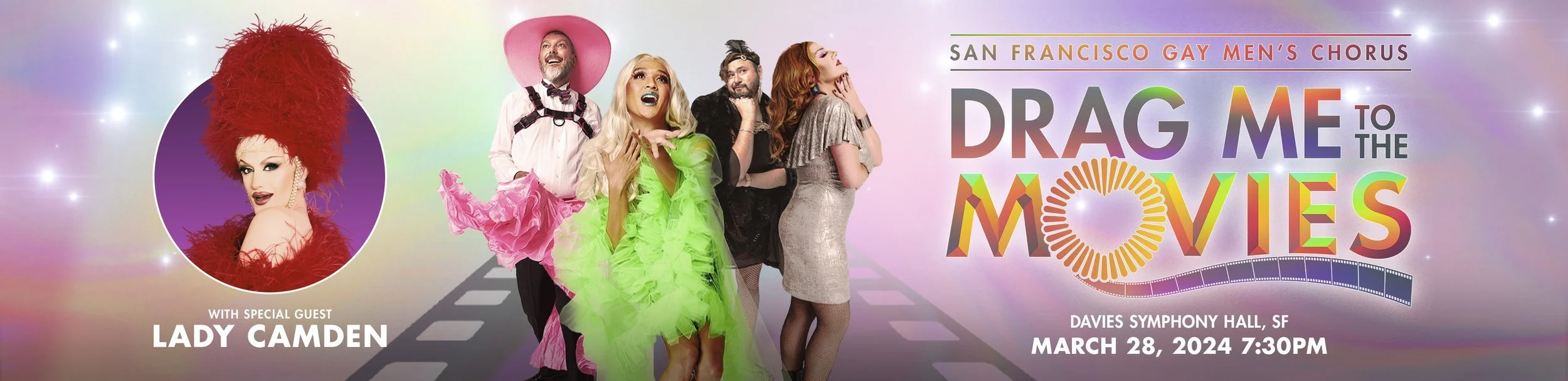
Kicking off our lineup on March 28, 2024, "Drag Me to the Movies" promises an evening filled with glamour, akin to a Hollywood premiere but infused with the unique magic of drag, iconic film scores, and pop culture anthems. Join us as we step into a realm where love commands the spotlight, featuring the incredible Lady Camden. The event transcends traditional movie magic, offering a dynamic celebration where love is the true hero.

Drag Me to the Movies

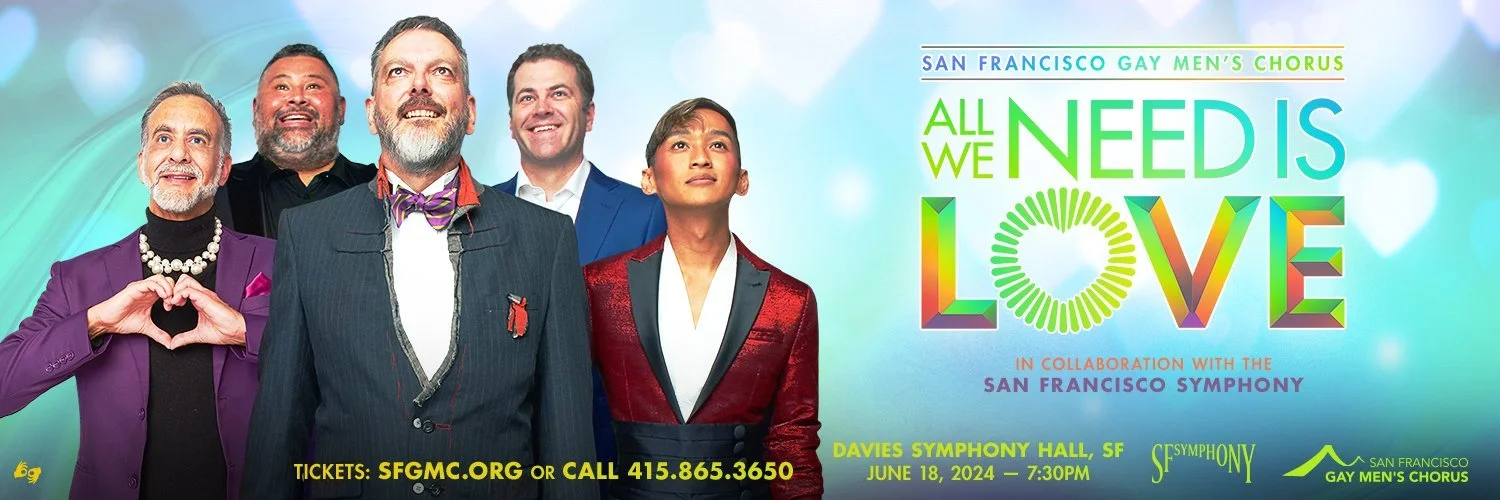
Following this, on June 18, 2024, we warmly invite you to "All We Need is Love," our collaborative endeavor with the San Francisco Symphony. This concert is an ode to love songs, taking you on a harmonious journey through the many faces of love.

ALL WE NEED IS LOVE

From the deeply traditional ballads to the beats of contemporary anthems, the concert is a heartfelt reminder of love’s enduring power to connect and uplift us. Far more than a simple concert, it's an immersive experience that weaves together the essence of romance, connection, and the universal message that all we really need is love.

Together with Davies Symphony Hall, we at the SFGMC are proud to curate these musical experiences, inviting one and all to revel in the beauty and diversity of love. So, save the dates, secure your tickets, and let’s unite in the joy of music and love. We can't wait to share these memorable nights with you.

Uniting Communities through Music at Davies Symphony Hall

Davies Symphony Hall, with its rich history and commitment to showcasing a spectrum of musical talents, has significantly contributed to the vibrancy of San Francisco's music scene. Its dedication to incorporating a diverse range of voices, particularly from the LGBTQIA+ community, has not only enhanced the cultural landscape but also positioned the hall as a pivotal community hub for advocacy and representation.

The variety of Davies Symphony Hall concerts stands as a testament to the venue's role in fostering an inclusive environment where artistry and identity converge, celebrating the unique contributions of each performer and performance that graces its stage.

This illustrious venue does more than host events; it actively champions the cause of LGBTQIA+ inclusion in the arts, making every concert a step towards greater understanding and acceptance. The Davies Symphony Hall concerts are more than just musical events; they are gatherings that reflect the hall's ongoing commitment to breaking down barriers and creating spaces where all artists can shine.

Looking ahead, the potential for Davies Symphony Hall to continue enriching San Francisco's music scene with diverse voices is boundless. As it remains steadfast in its support for LGBTQIA+ representation, the hall not only upholds its legacy of artistic excellence but also reinforces its fundamental role as a beacon of diversity and inclusivity in the community.

8 Best Gay Anthems Ever about LGBTQIA+ Love and Acceptance

Love songs are like universal languages, speaking straight to your heart in melodies that echo our deepest emotions. They're the soundtrack to our lives, turning up the volume on every feeling from head-over-heels joy to tearful heartbreak.

For the LGBTQIA+ community, these gay anthems of love and acceptance do something extra magical: they sing out loud about love that hasn’t always been allowed to shine, celebrating it in all its beautiful colors.

This February, as we surround ourselves with all things love, we're diving into some amazing tunes by LGBTQIA+ artists and allies who turn their feelings into music that makes us all want to fall in love. This collection of tracks is an exploration of love's many dimensions, expressed through the voices of artists who share their journeys of love and identity with open hearts and soul-stirring honesty.

May these songs inspire us to embrace love in all its forms, to dance with abandon under its spell, and perhaps, to fall a bit deeper into the embrace of love itself.

"Your Song" by Elton John

Written by Bernie Taupin and brought to life by Elton John's music and soaring vocals, this all-time classic 'isn't just a love letter; it's a universal anthem that transcends labels and speaks to the core of what makes love beautiful.

Forget grand gestures and flowery promises, this song shines with its raw, heartfelt sincerity. Taupin's lyrics, delivered with John's undeniable passion, celebrate the little things - a shared smile, the comfort of silence, the way someone makes you feel complete.

It's a love song stripped bare, revealing the pure joy of appreciating and cherishing someone for who they are.

Elton John's journey as an artist has been as impactful as his music, marked by his openness about his sexuality and his status as one of the first major artists to come out as gay. This act of courage, especially during a time when the LGBTQIA+ community faced widespread stigma and discrimination, positioned him as a beacon of hope and an advocate for love and acceptance. Indeed, he is a true icon of love's boundless capacity.

"Girls Like Girls" by Hayley Kiyoko

Hayley Kiyoko, affectionately known by fans as "Lesbian Jesus," marked a significant moment in music history with her 2015 breakthrough hit "Girls Like Girls." The song, co-written by Kiyoko, boldly narrates a story of same-sex love and desire, breaking barriers in the pop music scene with its unapologetic portrayal of lesbian relationships as lesbian songs often do.

Its accompanying music video, directed by Kiyoko herself, further amplifies the song's message, showcasing the challenges and triumphs of young love between women. This powerful combination of relatable lyrics and compelling visuals struck a chord with a wide audience, turning the song into an anthem of acceptance and LGBTQIA+ visibility.

In fact, the song's success laid the groundwork for what has been dubbed "20GayTeen" (2018), a banner year for LGBTQIA+ visibility in music.

"Mystery of Love" by Sufjan Stevens

Featured in the acclaimed film "Call Me by Your Name," Mystery of Love is a hauntingly beautiful ode to the complexities of first love, especially within the context of queer relationships.

His signature ethereal soundscape perfectly captures the film's essence – the intoxicating first love, the forbidden desires, and the melancholic self-discovery. Delicate guitar notes and Sufjan's melancholic vocals paint a dreamlike scene, while lyrics referencing both the Bible and forbidden love hint at the complexities of the central relationship.

But "Mystery of Love" isn't just about angst. This beautiful gay love song is a bittersweet celebration of fleeting connection. The song swells with tenderness, acknowledging the impermanence of love yet cherishing its profound impact.

This gay anthem transcends the film, whispering secrets of forbidden desires and stolen glances, resonating with anyone who has ever navigated the complexities of queer love and longing. It's a reminder that even temporary connections can leave lasting imprints, shaping who we become.

“Thinkin Bout You,” Frank Ocean

Frank Ocean's "Thinkin Bout You" stands as a seminal piece in the evolution of R&B when vulnerability and queer identity found a powerful voice within the genre. Ocean's candidness about his bisexuality, particularly in an industry and genre often marked by rigid norms regarding sexuality, broke barriers and paved the way for a more inclusive music scene. His openness, coupled with his undeniable talent, has not only influenced the R&B genre but also shifted the cultural conversation around LGBTQIA+ representation in music.

"Thinkin Bout You" is a poignant exploration of love and longing, with Ocean's smooth vocals gliding over a minimalist beat, encapsulating the complexity of reminiscing about a past love. It stands as a milestone for LGBTQIA+ representation, offering a narrative that is both deeply personal and universally relatable.

“Make Me Feel,” Janelle Monáe

"Make Me Feel" is a masterclass in conveying complex themes through pop music, blending funk, soul, and R&B elements to create a sound that's as infectious as it is meaningful. Bursting with Monáe's signature electrifying vocals, the song's lyrics and Monáe's dynamic performance encapsulate the fluidity of desire, while its music video serves as a colorful, symbolic celebration of LGBTQIA+ identities. This song explodes with liberation, refusing to be confined by labels.

Praised for its contribution to LGBTQIA+ visibility, "Make Me Feel" exemplifies Monáe's role as a musical innovator and advocate for inclusivity. Through this pride song, she delivers a resonant message: to love openly and unapologetically, highlighting her influence as a voice for progress and acceptance in the music industry.

"Believe," by Cher

Cher's anthem "Believe" stands as an emblem of empowerment and resilience, echoing deeply within the LGBTQIA+ community and beyond. Released in 1998, the song broke new ground with its innovative use of Auto-Tune, setting a sonic trend in pop music while delivering a powerful message of hope and self-affirmation.

Cher, uses the track to pose the poignant question, "Do you believe in life after love?" This line, emblematic of the song's theme, encourages listeners to find strength and perseverance in the face of adversity.

The enduring popularity of "Believe" is a testament to its impact, transcending its initial release to become one of the most timeless gay anthems of hope. Cher's status as both a pop icon and an advocate for LGBTQIA+ rights amplifies the song's significance, making it a rallying cry for love, acceptance, and the belief in a brighter future.

"Dancing With a Stranger," by Sam Smith and Normani

Sam Smith and Normani's "Dancing With a Stranger" transcends labels, offering a nuanced exploration of desire and connection. Released in 2020, the song's pulsating rhythm and evocative lyrics paint a picture of a fleeting encounter fueled by mutual attraction.

The deliberately ambiguous lyrics leave room for interpretation, inviting listeners to connect with the song's emotional core regardless of their personal experiences. This challenges societal norms and celebrates the fluidity of desire, resonating with those who may not identify with traditional love stories.

Beyond identity, "Dancing With a Stranger" delves into shared vulnerability. It captures the bittersweet feeling of connection in a fleeting moment, acknowledging its impermanence while cherishing the emotional impact.

"We Belong Together," by Mariah Carey

Mariah Carey's iconic ballad, "We Belong Together," transcends labels, offering a universal story of longing and a powerful desire for connection. Released in 2005, the song resonated deeply with listeners, becoming an anthem for anyone who has ever felt the ache of lost love and the fervent hope for reconciliation.

Carey, a beloved gay icon, imbues the song with raw emotion and vulnerability. Beyond personal narrative, "We Belong Together" delves into the pain of separation and the desire to belong. This relatable theme transcends specific identities, reminding us that the human experience of connection and vulnerability is universal.

***

These songs, from Elton John's timeless declarations to Sam Smith's intimate confessions, are beautiful testimonies to the diversity of love, each track weaving a unique narrative that speaks to the heart of what it means to love and be loved in return. And these artists, through their music, invite us into their lives, sharing stories of joy, heartache, discovery, and affirmation that resonate with anyone who's ever loved or longed to be understood.

As we celebrate Love Month, let's go beyond simply listening to these powerful gay anthems. Let's use them as tools to better understand one another, fostering a world where openness and acceptance prevail.

Music has the incredible power to connect us, to tear down walls, and to foster a shared understanding of the human experience. By embracing these LGBTQIA+ anthems of love and acceptance, we celebrate the vibrant tapestry of human connection, where our differences become a source of beauty and strength.

Let's make this a celebration that echoes far beyond love month!

Top 12 Black LGBTQIA+ Artists Shaping the Future of Music

Think about how many mainstream hits from the last few years you can easily recall. 

Now, how many can you name that were created by openly black LGBTQ+ artists? 

Sadly, that number is likely much smaller. 

This stark difference highlights the ongoing struggle for true representation and visibility in the music industry. Black LGBTQIA+ artists offer unique sounds and stories that should be at the forefront of popular music – not relegated to the sidelines.

Yet even with this imbalance, groundbreaking queer musicians are out there rewriting the rules. These artists aren't just shaping the future of music, they are inspiring activism, fostering community, and embodying the transformative power that music holds. They are taking matters into their own hands, showing the world just how vibrant and vital their voices are. 

It is time to not only support the brilliant black queer singers who have carved and are carving their path today but work actively to dismantle systemic biases so that the next generation of artists can take center stage without boundaries.

It's not enough to simply admire their talent – we must also become active in their support. That means listening to their music, understanding their messages, and seeking out new, diverse gay black singers to elevate. 

Because in a world where music is all around us, shouldn't it sound as diverse and beautiful as the world itself?

Sylvester: The Disco Trailblazer Embracing His True Voice

Sylvester, known as the "Queen of Disco," was a force of nature whose flamboyant stage presence and powerful falsetto vocals helped define the dance music era of the 1970s. Beyond his groundbreaking music, Sylvester challenged norms with his androgynous style and open embrace of his identity as a gay black man.  He embodied the liberating spirit of disco—expressing yourself through music, movement, and a refusal to be confined by expectations.

His androgynous image blurred gender lines, with dazzling costumes and bold makeup making him an impossible-to-ignore stage presence. Sylvester understood the power of spectacle, but his talent was undeniable. 

Sadly, Sylvester’s career faced obstacles stemming from homophobia and racism within the music industry. His legacy often remains linked to disco's fall from mainstream popularity. His 1988 death from AIDS tragically cut short a career of unyielding authenticity and brilliance.

Though often overlooked, Sylvester was a crucial figure in paving the way for queer artists like Prince, George Michael, and many more who took risks to forge their own unique paths. More than a fabulous disco singer, he was a tireless champion of those left ostracized by both mainstream society and the AIDS crisis that devastated the LGBTQ+ community. 

Key Track to Listen For: "You Make Me Feel (Mighty Real)" – An undisputed disco classic brimming with joyful celebration and Sylvester's soaring vocals.

Lil Nas X: The Barrier-Breaking Icon

It's impossible to talk about black LGBTQIA+ musicians without mentioning Lil Nas X. The meteoric rise of this young superstar wasn't just about creating catchy songs; it was a complete shattering of expectations.  With "Old Town Road," he boldly blurred genre lines, mixing country and trap influences into an irresistible hit. The controversy it sparked mirrored so many societal tensions around genre, race, and identity, yet Lil Nas X refused to shrink from attention.

Instead, he used his platform to become a beacon of open and fierce authenticity. Songs like "MONTERO (Call Me By Your Name)" directly confront prejudice with powerful, sometimes provocative music videos. His defiance wasn't just musically audacious,  it was an act of radical visibility and courage.
Key Track to Listen For:  MONTERO (Call Me By Your Name) 

Follow Lil Nas X Here: Spotify, @LilNasX on X, @lilnasx on YouTube.

Janelle Monáe: An Artist as Multifaceted as the Future

Defying labels is Janelle Monáe's artistic superpower. With musical influences spanning funk, R&B, and even Afrofuturism, she is a true musical chameleon. But beyond the diverse soundscapes, it's the way Monáe weaves complex narratives around freedom, technology, and self-discovery that keeps listeners captivated. Her artistic persona embraces an android alter-ego, Cindi Mayweather, as both a tool for personal exploration and commentary on societal expectations.

Openly pansexual and gender non-conforming,  she proves labels are limiting, championing the power of evolution and self-discovery. Her music radiates defiant joy, reminding us that rebellion starts with embracing authentic self-expression.

Key Track to Listen For:  "Pynk" – A celebration of queer love and female empowerment, wrapped in an undeniably catchy melody.
Follow Her Here: The Age of Pleasure, Official Site, Twitter, Facebook, Instagram.

Mykki Blanco: The Boundary-Shattering Pioneer

A rapper, performance artist, and poet, Mykki Blanco weaves together threads of vulnerability, defiance, and unapologetic self-expression. They were among the first openly trans artists to gain prominence in the hip-hop sphere, shattering boundaries around expectations of genre and gender.

Mykki Blanco's activism is inseparable from their art. Songs tackle issues like the AIDS crisis, social injustice, and the complex experiences of marginalized groups within the LGBTQIA+ community. Beyond the stage, Blanco advocates for queer and trans rights, challenging norms and demanding space for voices that deserve to be heard. 

Key Track to Listen For: "The Initiation"-Embodies Blanco's artistry:  poetic, fierce, and refusing to be ignored.

Follow Them Here: Instagram, Spotify, Soundcloud

Big Freedia: The Queen Diva of Bounce

Bounce music – infectious rhythms, call-and-response vocals, and a spirit of joyous energy – is the undeniable soundtrack of New Orleans. But for far too long, its LGBTQIA+ roots were overlooked by the mainstream music industry. Thankfully, Big Freedia, the undisputed Queen Diva of the genre, wasn't about to let that stand. Whether collaborating with Beyoncé or Drake, bringing bounce to television audiences, or headlining her own shows, she is a tireless ambassador for her own community and the culture that nurtured her.

Big Freedia is a shining example of music empowering individuals to claim their space with pride.  A self-proclaimed "gender-fluid sissy bounce artist," Big Freedia challenges expectations with her booming voice and larger-than-life persona. She radiates infectious confidence and makes it clear: everyone should have a place to shake their bodies to the beat and feel embraced for exactly who they are. 

Key Track to Listen For: "Explode" A pure blast of bounce energy guaranteed to move both your body and your spirit.

Follow her here: Website, Facebook, Instagram, Twitter.

Shea Diamond: Her Voice is a Force for Transformation

A former inmate whose resilience fuels her artistry, Diamond's music is a fierce testament to survival.  Though often tackling serious themes, her voice refuses to be defined by defeat.  Her work is a vibrant call for a world where trans women aren't targets of violence but icons of power. Drawing on a rich history of blues and gospel, Shea reclaims her narrative through music with defiance, reminding listeners that "diamonds" are formed under pressure, and there's unbreakable strength in embracing every piece of who you are.

Her lyrics confront society's ignorance about the trans experience, boldly demanding more than just acceptance – they demand respect and genuine understanding.  Shea Diamond offers herself as living proof that you can reclaim your narrative, use your voice as a force for change, and inspire others to fight for themselves.

Key Track to Listen For: "Don't Shoot" - A poignant and raw ballad addressing police brutality and racial injustice, highlighting Diamond's commitment to both artistry and activism.

Follow Her Here: American Pie, Instagram, Facebook, Twitter, Spotify, Apple Music

Saucy Santana: The "Material Gworl" Blazing a Trail

Saucy Santana shatters hip hop's rigid masculinity with his "Material Gworl" persona – celebrating confidence, knowing your worth, and always serving a fierce look. Santana flips the script, celebrating confidence and joyful defiance as a proud gay man.  But beyond the image, Santana is a talented rapper with sharp lyrics and undeniable charisma. His songs blend humor, social commentary, and an unrelenting belief in self-empowerment.

Key Track to Listen For: "Walk"  –  Embodies Santana's attitude – brash, playful, and full of attitude about owning your space in the world.

Follow Him Here: Standin' on Bidness, Instagram, Twitter, Apple Music, Spotify

Kehlani: Heart on Sleeve, Empowering Through Song

With introspective lyrics that dive into love, loss, and the complexities of personal growth, Kehlani connects deeply with a fanbase eager for raw honesty.  While often tackling themes of heartbreak, her songs ultimately radiate strength. They resonate with anyone looking for authentic self-expression in a commercial music landscape that favors image over vulnerability. Kehlani's career isn't just about the hits;  she openly identifies as queer and gender-fluid, using her platform to normalize a spectrum of identities.  

Key Track to Listen For: "Can I" (feat. Tory Lanez) – Blends a catchy R&B vibe with an emotionally honest core, perfectly encapsulating Kehlani's style.

Follow Her Here: Instagram, Facebook, Soundcloud.

Meshell Ndegeocello: Genre-Defying Pioneer, Challenging Norms Through Sound

For decades, Meshell Ndegeocello has carved her own musical path, seamlessly moving between jazz, funk, spoken-word, and soulful R&B. It's her musical fluidity that resonates deeply with artistic rebels who feel creatively restless or confined to boxes. Her willingness to subvert expectations with each release sets a powerful example for younger artists pushing for the same freedom.

Openly bisexual, Ndegeocello often explores themes of sexuality and identity in her lyrics, without being bound to simplistic labels.  It's the combination of genre-defying talent and uncompromising individuality that makes her such an empowering figure for queer fans.

Key Track to Listen For: "Leviticus: Faggot" – A daring challenge to societal prejudice, mixing spoken word with her smooth musical style.

Follow Her Here: Facebook, Twitter, Website.

Honey Dijon: The Global Ambassador of Queer Club Culture

Honey Dijon infuses the global club scene with a vital dose of queer and trans representation. A true tastemaker, Dijon hails from Chicago's house music roots, bringing classic disco vibes and soulful vocals to her infectious dancefloor sets. As a black trans woman at the forefront of the electronic music industry, her presence shatters expectations.

More than just an incredible DJ, Dijon actively advocates for trans rights, ensuring her musical success extends beyond the party and creates meaningful action within the communities she represents. Her message is clear: dance floors are for everyone.

Key Mix to Check Out: [Include link to a YouTube or Soundcloud mix that offers a snapshot of Dijon's signature sound.] Follow Her Here: Instagram, Spotify, Apple Music, Facebook, Amazon Music.


Jake Blount - Pioneering Representation in Traditional Music

Jake Blount’s work delves deep into the roots of African American and Indigenous music traditions, unearthing and reclaiming a heritage often overlooked in mainstream narratives. As an openly gay Black man, Blount brings a unique and necessary perspective to the folk and old-time music scene, challenging the genre's boundaries and fostering a more inclusive musical community within traditionally white and heteronormative music spaces. 

His album "Spider Tales," a collection that explores the complexities of Black and queer identity through traditional music, has been critically acclaimed for its innovative approach and its role in storytelling and cultural preservation.

Blount's contribution to music goes beyond his personal identity; he actively engages in conversations about diversity, equity, and inclusion in music, using his platform to highlight the importance of LGBTQIA+ and Black voices in shaping the future of American traditional music. 

Key Track to Listen For: "Boll Weevil"

Follow Him Here: Facebook, Instagram, Twitter, Spotify, Cdbaby,

RuPaul: Drag Superstar and Mainstream Trailbrazer

You can't discuss Black LGBTQIA+ musical influence without RuPaul.  While known as the world's most famous drag queen, his talent extends to music, acting, and a savvy sense of self-marketing. His early music videos like "Supermodel (You Better Work)" injected camp and a celebration of queerness into the mainstream.  However, it's the creation of "RuPaul's Drag Race" that truly solidified his position as a pop culture force.
Beyond just creating a television phenomenon, "RuPaul's Drag Race" became a platform for showcasing extraordinary drag performers, many of whom identify as queer, trans, or artists of color. RuPaul champions artistic expression in all its forms, giving those historically on the sidelines the spotlight they deserve. While his legacy has not been without controversy, he is undeniable proof that embracing yourself unapologetically can smash societal barriers and generate space for others to do the same.

Key Track to Listen For: "Supermodel (You Better Work)" – It encapsulates his bold attitude and has a pop sensibility that helped bridge the gap between drag and the mainstream.

Follow him here: Official Website, Instagram, TikTok, Twitter, YouTube.

Beyond Streaming: How to Actively Support Black LGBTQIA+ Artists

Discovering these incredible musicians has been just the first step! You have the power to help these artists break down barriers, shift the industry landscape, and empower future generations. Here are a few impactful ways to step beyond passive listening and into active support:

  • Share and amplify: Post about these black queer artists on social media, tell your friends, and encourage a broader audience to explore their work. Visibility makes a difference!

  • Seek Out New Voices: Don't stop with those featured here. Countless black LGBTQIA+ artists deserve discovery. Use playlists, music publications, and online resources to delve deeper.

  • Put your money where your values are. Purchase directly from artists or their merchandise sites, rather than relying solely on streaming.

  • Attend shows and events: If these artists perform live in your area, buy tickets and bring friends. There's something powerful about collectively experiencing their talent.
    Engage with Causes They Support: Many artists use their platforms for activism. Follow their lead by donating to or volunteering with organizations whose work aligns with the issues raised in their music.

Your Passion Matters

Every song you love, every artist you share—it's like lighting a candle in a world that sometimes feels a bit too dim. Your support means everything. It sends out this ripple, telling the world that, yes, we're all here for the music that tells every story, especially those that have been waiting too long in the shadows. It's about making sure everyone's tune gets a chance to play loud and proud.

At the San Francisco Gay Men's Chorus (SFGMC), we celebrate these artists and join them in harnessing music to champion LGBTQIA+ rights and foster inclusivity. Our home, The Chan National Queer Arts Center, is where we turn notes into action, creating music that not only sounds good but feels good, driving change one song at a time.

Come see a show, feel the unity, and experience the power of community. Your voice adds to our harmony, helping us sing a brighter future into existence. Together, we're not just making music; we're making a difference.

Celebrating LGBTQ+ Composers in Music History

The world of classical and contemporary music has been enriched by the contributions of hundreds of LGBTQ+ and queer composers. These talented individuals have left indelible marks on the music industry, challenging norms and using their artistry to advocate for LGBTQ+ rights and acceptance. 

Read on and prepare to explore the history, challenges, and achievements of LGBTQ+ composers, highlighting the diversity within their ranks. We'll also list some of the most influential and celebrated LGBTQ+ composers in classical and contemporary music.

History of LGBTQ+ Composers

The historical tapestry of LGBTQ+ composers is one defined by resilience and artistic innovation. Throughout history, these individuals have contributed significantly to the world of music, often in the face of societal prejudices. From ancient civilizations to modern times, LGBTQ+ composers have been creating music that transcends boundaries and connects people through shared experiences.

As early as the 15th century, LGBTQ+ composers were making their mark in the music world. The Italian composer Francesco Cavalli, who is believed to have been gay, was a pioneer of opera and one of the most influential composers of his time.

Moving into the 19th and 20th centuries, LGBTQ+ composers continued to break down barriers and challenge societal norms—even during a time when being open about one's sexuality could result in persecution and discrimination.

Well-known examples include composers Pyotr Ilyich Tchaikovsky and Benjamin Britten who have gained recognition for their contributions to classical music while navigating the complexities of being queer in a conservative society.

Challenges Faced by LGBTQ+ Composers

The experiences faced by Tchaikovsky and Britten were, unfortunately, not unique to LGBTQ+ composers. In fact, the history of LGBTQ+ composers is interwoven with significant adversity, a testament to their determination and dedication to their craft.

Tchaikovsky’s story is a particularly powerful example of overcoming the roadblocks many LGBTQ+ composers have faced throughout history. In 19th-century Russia, he struggled with concealing his homosexuality due to the societal norms of his time. Despite this barrier, he still left an enduring mark with masterpieces like "Swan Lake'' and "The Nutcracker."

To overcome the gossip and rumors surrounding his sexuality, Tchaikovsky married a woman. As this article from Classic FM explains, he was “gay at a time when it was illegal in Russia. His marriage was designed to stop people gossiping about his love life – but it turned into a source of misery and torment for both him and Miliukova.”

Again, this story is not unlike that of many other LGBTQ+ artists. Historically, societal discrimination and prejudices created an environment that forced many LGBTQ+ composers to hide their identities. Censorship and persecution loomed over their artistic expressions, and exclusion from mainstream opportunities hindered their careers.

Yet, even amid these hardships, LGBTQ+ composers persevered and made substantial contributions to music. Their unique perspectives and experiences brought fresh dimensions to various musical genres, breaking through societal constraints and forging new paths within the world of composition.

The LGBTQ+ rights movement in the late 20th century paved the way for more visibility and acceptance of queer identities in music. Today, LGBTQ+ composers are considered an integral part of the music industry, making groundbreaking contributions that continue to shape the landscape of classical and contemporary music.

As we look at the lives of the following 18 LGBTQ+ composers, we'll see their stories are not only a testament to their remarkable talent and resilience but also an enduring reminder of the power of music to transcend barriers and bring about social change.

18 LGBTQ+ Composers

Now, let's take a closer look at 18 talented LGBTQ+ composers who have made their mark on the music industry.

1. Pyotr Ilyich Tchaikovsky

This renowned Russian composer, Pyotr Ilyich Tchaikovsky, is celebrated for his emotionally charged and exquisitely melodic compositions. Born in 1840, his music remains among the most beloved and widely recognized in the world.

However, as we have discussed, Tchaikovsky's personal life was plagued by societal expectations that deemed same-sex relationships as taboo. Despite his struggles with his sexuality, he continued to create beautiful music until his untimely death in 1893.

2. Dame Ethel Smyth

Smyth was a lesbian British composer and suffragette who challenged gender norms through her music. She is known for her operas, including "The Wreckers" and "Der Wald," which were praised and criticized for their bold themes and strong female characters. Smyth also paved the way for women in classical music, becoming the first female composer to receive a damehood.

3. Leonard Bernstein

Leonard Bernstein was an American composer and conductor known for his dynamic and expressive conducting style. He is also remembered for his Broadway musicals, including "West Side Story" and "On the Town." 

Bernstein's personal life was a topic of speculation as he struggled to reconcile his sexuality with his public image. However, his contributions to the music world remain unparalleled. Bradley Cooper is set to play him in an upcoming film, likely to boost his already substantial legacy.

4. Samuel Barber

Samuel Barber, a celebrated American composer of the 20th century, is renowned for his exquisite compositions and contributions to the world of opera. Beyond his musical genius, Barber's personal life added an additional layer of significance to his work, as he was openly gay at a time when societal acceptance of LGBTQ+ individuals was limited.

Moreover, Barber's willingness to explore themes of same-sex love in his compositions was a bold and groundbreaking move. This exploration represented a significant stride in LGBTQ+ representation in music, as his works provided a platform for the expression of queer experiences and emotions within a musical context.

5. Jean-Baptiste Lully

Born in 1632, Jean-Baptiste Lully was a bisexual Italian-born French composer often credited with developing the French opera style. He worked closely with King Louis XIV and his court, composing music for royal ceremonies and theatrical performances. Lully also played a crucial role in standardizing notation and musical terminology in France. 

6. Georg Friedrich Handel

Georg Friedrich Handel was a German-born composer who most historians assert was gay. He spent most of his career in England. There, he composed numerous operas, oratorios, and instrumental works. His most famous composition, "Messiah," continues to be performed and cherished by audiences worldwide. 

7. Lou Harrison 

Lou Harrison was an American composer known for incorporating non-Western musical elements into his compositions. Along with being a composer, Harrison was also a painter, music theorist, and music critic. Harrison was openly gay and explored themes of queerness in his music until he passed away in 2003.

8. Jennifer Higdon

Known for her dynamic and highly expressive compositions, Jennifer Higdon is a prominent American composer who has won numerous accolades throughout her career. From orchestral works to chamber music and operas, Higdon's music reflects her unique voice and perspective as a lesbian artist. 

In addition to being a trailblazer for LGBTQ+ representation in classical music, Higdon is a passionate advocate for music education and has mentored countless young composers. Her contributions to the world of music continue to inspire and captivate audiences around the globe. 

9. Pauline Oliveros

Pauline Oliveros was an American composer and pioneer of experimental and electronic music who passed away in 2016. She identified as a lesbian and was a leading figure in the LGBTQ+ and feminist music movements. 

Oliveros's compositions often incorporated improvisation, meditation, and deep listening techniques, challenging traditional notions of musical performance. Her legacy continues to influence contemporary composers and performers, demonstrating the power of inclusivity and diversity in the arts.  

10. Wendy Carlos

A pioneer in the classical and electronic music worlds, Wendy Carlos is a transgender composer and musician who rose to fame with her groundbreaking album Switched-On Bach. Her innovative use of synthesizers helped legitimize electronic music as a serious genre and opened doors for future experimentation. 

11. Ned Rorem

Ned Rorem was an American composer known for his incredible contributions to art songs and choral music, including over 500 art songs. Rorem has been openly gay throughout his career.

12. Nico Muhly

Another prominent LGBTQ+ composer, Nico Muhly, has gained acclaim for his compositions that often explore themes of identity and sexuality. His opera Sentences, based on the life of Alan Turing, showcases Muhly's unique ability to blend traditional operatic elements with contemporary influences. 

13. Aaron Copland

One of the most beloved American composers, Aaron Copland, was also a member of the LGBTQ+ community. Although he never publicly identified as gay, his sexuality is well-known among scholars and musicians, and he was said to be very open about his sexuality among his personal circle. 

He is known for his iconic works, including Appalachian Spring and Fanfare for the Common Man, which helped shape a distinctly American sound in classical music. Copland's style is often described as "American Romanticism," featuring melodies inspired by folk and jazz music. 

14. Angela Morley

Angela Morley was a transgender composer and arranger known for her work on film and television scores. She worked on many popular productions, such as The Muppet Show, Dallas, and Watership Down. Despite facing discrimination and challenges in the industry due to her gender identity, Morley's talent and dedication to her craft shone through in her compositions. 

15. Julius Eastman

A pioneer of minimalism and avant-garde music, Julius Eastman was a gay African-American composer whose work was often politically charged and explored themes of race and sexuality. Despite his contributions to the genre, his works were largely overlooked, and he faced struggles with addiction and homelessness later in his life.

16. Meredith Monk

Born in 1942, Meredith Monk is a composer, singer, and choreographer known for her innovative and interdisciplinary approach to performance art. She has been creating boundary-pushing works since the 1960s that blend music, movement, and theater elements. 

Her work often explores themes of identity and the human experience, including sexuality, gender, and spirituality. She remains a prominent figure in the contemporary music scene and has received numerous awards for her contributions. 

17. Joan Tower

American composer Joan Tower has been a leading figure in the world of classical music since the 1960s. She is known for her bold and dynamic compositions, often featuring unconventional forms and instrumentation. 

Tower's work has been performed by major orchestras and chamber ensembles around the world, and she has received numerous awards for her contributions to music, including two Grammy award nominations and one win. 

She is also a dedicated educator, teaching composition at various universities and serving as the composer-in-residence for several orchestras. 

18. Benjamin Britten

As one of the most celebrated composers of the 20th century, Benjamin Britten is best known for his operas, including "Peter Grimes" and "Billy Budd." He also composed works for orchestra, chamber ensembles, solo instruments, and vocal works. 

Britten was open about his homosexuality when it was not widely accepted, and his personal struggles with identity are often reflected in his music. He also incorporated elements of folk music into many of his compositions, creating a unique blend of traditional and modern sounds. 

The Legacy and the Future of LGBTQ+ Composers

The legacy of LGBTQ+ composers is a testament to their resilience, creativity, and ability to break down barriers. Their contributions have enriched our lives. Today, their stories remind us of the power of music to transcend prejudice and promote acceptance. 

As we celebrate these composers, we also celebrate allies of the LGBTQ+ community and their enduring impact on the arts.

How the San Francisco Gay Men’s Chorus Celebrates LGBTQ+ Composers

Our recent move to and opening of The Pansy L. Chan and Terrence D. Chan National Queer Arts Center signifies a pivotal moment for LGBTQ+ composers and the broader queer arts community. Located in the heart of San Francisco, this historic center serves as a sanctuary for queer artists and a platform for sharing lived experiences.

This groundbreaking venture by the San Francisco Gay Men's Chorus reaffirms our commitment to advancing LGBTQ+ equality while also celebrating LGBTQ+ composers and artists and the entire community.

Join us at the San Francisco Gay Men's Chorus to take part in our mission of promoting equality and inclusivity through music. Please consider donating today. 

Did you learn a lot from this article about LGBTQ+ composers?

Here are three more to read next:

The History of the LGBTQ+ Movement

In the bustling city streets of San Francisco and beyond, the chant for LGBTQ+ equality reverberates as a testament to decades of resilience, perseverance, and progress. 

The LGBTQ+ activism movement has been at the forefront of creating change with individuals, organizations, and communities all working towards a common goal: equality for all.

But where did this movement begin?

We'll dive deep into the history of the LGBTQ+ rights movement, including San Francisco's pivotal role in advancing the cause. 

Origins of the LGBTQ+ Movement

A notable event in the modern-day LGBTQIA+ rights movement was the Stonewall riots in New York City in 1969. A police raid on the Stonewall Inn, a popular gay bar in Greenwich Village, sparked the uprising. This event was one of many that marked a turning point in the fight for LGBTQ+ rights.

Leading up to this event was a series of others that played integral roles in the course of the LGBTQ+ movement.

Here are several of them:

Founding of the Mattachine Society (1950)

Harry Hay, along with a group of other LGBTQ+ activists, founded the Mattachine Society in Los Angeles in 1950. It was one of the earliest LGBTQ+ rights organizations in the United States. The Mattachine Society promoted LGBTQ+ social and political rights and was crucial in advocating for legal reform.

Magnus Hirschfeld's Scientific Work (Late 19th and Early 20th Century)

A German physician and sexologist, Magnus Hirschfeld, conducted pioneering research on homosexuality and transgender individuals. He co-founded the Scientific-Humanitarian Committee in 1897, one of the first LGBTQ+ rights organizations that advocated for decriminalizing homosexuality in Germany.

The Kinsey Reports (1948 and 1953)

Alfred Kinsey, an American biologist, and sex researcher, published two landmark studies, the Kinsey Reports. These reports, "Sexual Behavior in the Human Male" (1948) and "Sexual Behavior in the Human Female" (1953), provided comprehensive data on human sexual behavior, including same-sex experiences. They challenged prevailing beliefs about homosexuality and helped reduce its stigma.

The Daughters of Bilitis (1955)

Founded in San Francisco in 1955 by Del Martin and Phyllis Lyon, the Daughters of Bilitis was one of the first lesbian organizations in the United States. It provided a supportive social network and advocated for lesbian rights, helping to foster greater visibility and acceptance of lesbian individuals.

The Wolfenden Report (1957)

In the United Kingdom, the Wolfenden Committee, chaired by Sir John Wolfenden, recommended in its 1957 report that homosexuality should be decriminalized in England and Wales. This report was a significant step toward decriminalizing homosexuality in the UK in 1967.

The Cooper's Donuts Riot (1959)

The Cooper's Donuts Riot in Los Angeles in 1959 was one of the early instances of LGBTQ+ resistance against police harassment. Similar to the later Stonewall Riots, it involved patrons of a local donut shop fighting against police discrimination and harassment.

Homophile Movement Emerges (1950s-1960s)

The 1950s and 1960s saw the emergence of the homophile movement, which aimed to advance LGBTQ+ rights and acceptance through peaceful activism and education. Organizations we have mentioned, like the Mattachine Society and the Daughters of Bilitis,were part of this movement, which laid the groundwork for the more militant activism of the post-Stonewall era.

San Francisco's Role in LGBTQ+ Activism

San Francisco became a hub for LGBTQ+ activism and culture in the 1960s, partly thanks to its thriving gay community. The city's vibrant nightlife scene and liberal attitude drew queer individuals from all over the country seeking acceptance and freedom.

The city also saw the rise of influential LGBTQ+ activists, such as Harvey Milk, who became the first openly gay elected official in California. Milk's tragic assassination in 1978 only served further to ignite the movement in San Francisco and beyond.

The Impact on Queer Performing Arts

As the LGBTQ+ rights movement gained momentum, so did queer performing arts

Similarly, San Francisco became a hotbed for drag culture and cabaret shows, providing a platform for queer performers to express themselves freely. These artistic expressions entertained audiences and helped break down stereotypes while pushing for greater visibility and acceptance.

Continuing the Fight Today

In the journey toward LGBTQ+ equality, we have witnessed substantial progress in recent years. However, the battle for complete equality and unconditional acceptance is far from over. In this ongoing struggle, the city of San Francisco emerges as a powerful symbol of resilience and progress within the LGBTQ+ community. 

With its unwavering commitment to inclusivity, this vibrant city continues to host numerous Pride events and fervently advocates for policies that pave the way toward a brighter, more equitable future.

Key Milestones in LGBTQ+ Activism

  • 1950s: The formation of organizations, including the Mattachine Society and the Daughters of Bilitis, laid the groundwork for public visibility. Yet, these early efforts often faced backlash and police harassment. 

  • 1966: In 1966, the Compton’s Cafeteria riot took place and proved to be not only one of the most influential events in the LGBTQ+ movement in San Francisco, but across the country. Triggered by police harassment of drag queens and transgender individuals, particularly trans women, it marked one of the earliest LGBT-related riots in the U.S. and heralded the beginning of transgender activism in San Francisco. 

  • 1969: Three years later, the Stonewall riots took place in New York City. These riots were a series of spontaneous, violent demonstrations by the LGBTQ+ community in response to a police raid at the Stonewall Inn, a popular gay bar. These riots are considered a pivotal moment in LGBTQ+ history, as they catalyzed the modern LGBTQ+ rights movement in the United States.

  • 1970s: Following the Stonewall Uprising and the Compton’s Cafeteria riot, the first Pride march occurred in June 1970 in New York City. The decade also saw the rise of the LGBTQ+ choral movement, a testimony to the intertwined relationship of activism with music and queer performing arts. The SFGMC made its fabulous debut during this period, harnessing the power of musical activism to combat discrimination.

  • 1980s: This decade was marred by the AIDS crisis. Activist groups like ACT UP raised awareness, fighting for medication and against widespread stigma. 

  • 1990s to early 2000s: The fight for marriage equality began earnestly, with activists pushing for legal recognition of same-sex relationships. In 1993, the discriminatory “Don’t Ask, Don’t Tell” policy was issued, banning gay, lesbian, and bisexual service members from the American military for 17 years, until it was lifted in 2011.

  • 2010s: The U.S. saw the federal legalization of same-sex marriage on June 26, 2015, a monumental victory for LGBTQ+ rights. However, always dynamic, the movement shifted its focus to other pressing issues like transgender rights, visibility, and combating anti-LGBTQ+ legislation. (As of October 2023, the ACLU is tracking 496 anti-LGBTQ bills in the U.S.)

  • 2020s: With the world constantly changing, the LGBTQ+ community continues to fight for equality and representation. The recent surge of Black Lives Matter protests has also brought attention to intersectionality within the LGBTQ+ movement and the importance of amplifying marginalized voices. Not to mention, in 2023 alone, more than 600 anti-LGBTQ bills were brought forth in state and local legislatures, signifying how much work is left to be done. In a move of solidarity with the LGBTQ+ community, President Biden proclaimed June 2023 “Lesbian, Gay, Bisexual, Transgender, Queer, and Intersex Pride Month,” and spoke out against these hateful acts.

Where the LGBTQ+ Movement Is Now

While we've made impressive strides, the fight for complete equality persists. 

Current Challenges

Here we are in late 2023, and the LGBTQ+ community still faces many challenges. Some of the most pressing issues include:

  • Discriminatory legislation: Despite legalizing marriage equality, there are still no federal protections for LGBTQ+ individuals in areas such as employment, housing, healthcare, and adoption.

  • Trans rights: Transgender individuals continue to face discrimination and violence at alarming rates. Advocacy efforts remain ongoing to ensure equal rights and protections for the trans community.

  • Rise of anti-LGBTQ+ sentiments: Hate crimes against LGBTQ+ individuals have been rising in recent years, with a notable spike during the COVID-19 pandemic. We must continue educating and advocating against these harmful attitudes.

  • Anti-drag laws: Among the many anti-LGBTQ+ sentiments, there are also laws in place that specifically target drag performers, such as the recent "drag queen ban" in Hungary. In moves called "subtle and sinister" Tennessee, Texas, and Montana have each put laws into place that ban drag performers from performing in certain public places.

Battles We Are Still Fighting

Along with these current challenges, ongoing battles exist for the LGBTQ+ community to gain equal rights and representation.

  • Conversion therapy: This harmful practice, which aims to change an individual's sexual orientation or gender identity, is still legal in many states. Efforts are being made to ban conversion therapy nationwide.

  • Discrimination in healthcare: Many LGBTQ+ individuals face discrimination when seeking healthcare, leading to inadequate or even denied treatment. Advocacy efforts focus on implementing policies that protect the rights and well-being of LGBTQ+ patients.

  • Intersectionality: The LGBTQ+ community comprises individuals from all backgrounds and identities. It's essential to recognize and address the intersectional discrimination faced by LGBTQ+ individuals who also face racism, sexism, ableism, and other forms of oppression.

The Role of Organizations in the LGBTQ+ Movement

Locally and globally, organizations play a crucial role in advocating for LGBTQ+ rights and creating safe spaces for the community. One particular organization is the San Francisco Gay Men's Chorus.

Not only do we provide a platform for queer performing arts, but we also use our platform for musical activism and advocacy. We have a long history of pushing boundaries and elevating the narrative of the LGBTQIA+ community through our performances and outreach. 

RHYTHM is one of these programs and it sets out to build empathy in schools and empower LGBTQIA+ youth across the bay area. 

Other gay organizations run by volunteers, such as The Trevor Project and GLSEN, provide resources and support for LGBTQ+ youth in schools. The Human Rights Campaign advocates for LGBTQ+ rights on a political level, working towards legislation that protects the community's rights.

Collectively, these organizations play a crucial role in fighting for equality and creating a more inclusive society for LGBTQ+ individuals. We're proud to be one of many that offer valuable resources, support, and education to combat discrimination and promote visibility. The Pansy L. Chan and Terrence D. Chan National Queer Arts Center stands as a testament to these endeavors. 

As the proud home of the San Francisco Gay Men's Chorus, the center plays a pivotal role in fostering community connections and championing LGBTQ+ representation in the arts. Delve into the profound impact and initiatives of the Chan National Queer Arts Center to truly appreciate its significance in promoting and nurturing queer arts.

Exciting Next Steps for The LGBTQ+ Rights Movement

The history of the LGBTQ+ movement showcases the relentless spirit of numerous activists. Many used arts as their expression and resistance medium. As we anticipate a future filled with acceptance and equality, we honor the journey we've undertaken. 

There are still many fights to be won, but the movement has come a long way. We look forward to the future with hope, as we march on to create a more inclusive world.

Today and every day, we remember the brave souls who paved the way and those still championing equal rights today.

If you're eager to learn more about topics relating to the LGBTQ+ rights movement, try one of these articles next:

The History of Queer Performing Arts

Across the vivid tapestry of human history, art has always served as an eloquent reflection of society. Often, it illustrates our triumphs and trials. Within this broad spectrum, queer performing arts have emerged as a formidable and poignant expression. 

These forms narrate the struggles, joys, and intricacies of the LGBTQ+ community. They stand as a testament to the resilience and creativity of queer individuals.

This article will explore the history of queer performance arts, including some of the most influential queer artists, and its impact on the world today.

What is Queer Performance Art?

Queer performance art is a niche yet impactful branch of the performing arts that spotlights the experiences, stories, and identities of queer individuals. 

Importantly, it stands distinct from the traditional norms. It dares to challenge the status quo and seeks to lend a voice to the unheard. The term 'queer' itself, reclaimed from its derogatory past, is now celebrated as an umbrella term for sexual and gender minorities.

Examples of queer performance art include drag shows, burlesque, cabaret, and experimental theater. These forms often blur the lines between reality and fantasy, allowing performers to express themselves in ways that may not be possible in everyday life.

A World of Expression and Storytelling

Queer performance, at its core, aims to tell stories - stories that resonate with the larger LGBTQ+ community, stories that challenge conventions, and stories that evoke a sense of pride and belonging. This art serves as a medium for artists to explore and express their identities.

Queer performance is an artistic platform that fosters courage, understanding, and camaraderie for people inside and outside the LGBTQ+ community.

Queer performance art often serves as a form of musical activism. It echoes the sentiments of the larger queer art movement, including the LGBTQ+ choral movement, in which organizations such as SFGMC play an instrumental role.

Queer Performing Arts Through History

Now, let's briefly look at critical moments in the history of queer performing arts to understand how it has evolved.

Ancient Queer Art

Queer performing arts have existed for centuries, with evidence as far back as Ancient Greece and Rome. During this time, performances such as Greek tragedies and Roman plays often featured cross-dressing and gender-bending characters. These performances reflected the fluidity of gender and sexuality in those societies.

Queer Performance in the U.S

It wasn't until the 20th century that queer performance art gained mainstream recognition. In the 1920s, performers like Mae West and Josephine Baker pushed boundaries with provocative acts, challenging societal norms and paving the way for future generations of queer artists.

The Modern Era of LGBTQ+ Performing Arts: Breaking Boundaries

In the 1960s, a number of notable events took place that marked turning points in LGBTQ+ history. 

One of the first was the Compton’s Cafeteria riot. It took place in August 1966 in San Francisco's Tenderloin district as a response to police harassment of drag queens and transgender individuals, especially trans women. It preceded the more famous Stonewall riots of 1969 and marked the start of transgender activism in San Francisco.

The Stonewall riots and Compton’s Cafeteria riot were two of many turning points in the history of the LGBTQ+ movement. In part, they led to increased visibility and acceptance of queer individuals, as well as an explosion of subversive performance art. 

The 1980s became a pivotal time for queer performing arts, particularly in the realm of queer music. Artists began to use their platforms to express their identities and address pressing issues like the AIDS crisis of the 1980s

This era also saw the rise of the LGBTQ+ choral movement, a powerful form of musical activism that brought the community together in harmony, literally and metaphorically.

Performers such as Divine, Leigh Bowery, and RuPaul gained recognition for their bold and unapologetic expressions of queerness. Drag queens became icons of the queer community, using their platforms to challenge societal norms and promote inclusivity.

The Effect on Society: Challenging the Status Quo

Queer performance art has often been political, pushing back against hetero-normative and cis-normative ideologies. By using their art to challenge these norms, performers have played a vital role in sparking conversations and effecting change.

In recent years, queer performance art has become more mainstream, with shows like RuPaul's Drag Race gaining worldwide popularity. This increased visibility has helped normalize queer identities and continues pushing the boundaries and challenging societal expectations.

San Francisco as the First City to Have a Drag Laureate

In 2023, San Francisco became the first city to have a drag laureate when D’Arcy Drollinger was appointed to the position.

In an interview with the Associated Press, Drollinger explains: “My goals are to make San Francisco sparkle. There’s a lot of power for the drag community in San Francisco. I feel very honored to be able to take that one more step.”

Her important role will entail celebrating drag culture, which is especially important at a time when there are so many anti-LGBTQ+ and drag bans in place across the country and around the world. To do this, she will be an ambassador to LGBTQ+, arts, nightlife, and entertainment communities in San Francisco.

Famous and Influential Queer Performing Artists

Many talented artists have left their mark on and off the stage in queer performing arts. From renowned openly gay musicians to trailblazing performers in theater and dance, their contributions have been nothing short of captivating. 

Here is a (non-exhaustive) list of some of the most renowned queer performing artists of all time:

  • Known for her vivid self-portraits, Mexican painter Frida Kahlo boldly depicted her bisexuality and gender identity.

  • Harvey Fierstein is an American actor, playwright, and activist who paved the way for LGBTQ+ representation on Broadway.

  • Marsha P. Johnson, an African-American transgender rights activist and drag performer, was a key figure in the Stonewall uprising in 1969.

  • In 1997, comedian, actress, and talk show host Ellen DeGeneres came out. In doing so, she set a new standard for queer visibility in mainstream media.

  • With roles including Gandalf in the Lord of the Rings, English actor Ian McKellen has been an unwavering advocate for LGBTQ+ rights.

  • Laverne Cox is a transgender actress and activist known for her role in the hit Netflix series Orange is the New Black. She has used her platform to raise awareness about trans issues and to be a fierce advocate for the LGBTQIA+ community.

  • RuPaul is a drag queen, singer, and TV personality. He is largely credited with bringing drag into the mainstream and breaking down barriers for LGBTQ+ artists.

  • Elton John is a British singer-songwriter and pianist who has been an outspoken advocate for LGBTQ+ rights. Over the years, he has used his music to explore themes of love, acceptance, and identity.

  • Best recognized as Sulu from the Star Trek franchise, Japanese-American actor George Takei continually highlights issues faced by the queer community and advocates for LGBTQ+ rights.

  • As the second transgender woman to win a Grammy, Kim Petras has been a groundbreaking force in queer performing arts.

From the History Books to the Future of LGBTQ+ Performing Arts

The queer performing arts are more than entertainment. They reflect a community's soul, a testament to its resilience, and an ode to its boundless creativity.

Organizations like SFGMC, through our ceaseless musical activism and dedication to the arts, continue to pave the way for a brighter, more inclusive future. We now proudly perform at our new home, the Chan National Queer Arts Center.

Whether you're a part of the LGBTQ+ community or a fierce LGBTQ+ ally, embracing and celebrating the queer performing arts is a step towards a world where love, acceptance, and self-expression reign supreme.

So, the next time you come across a queer performance, take a moment to appreciate its history, struggle, and extraordinary artistry.

Did You Enjoy Learning About the History of Queer Performance Art?

Here are more posts to read next:

San Francisco Performing Arts: Past, Present, and Future

Orpheum Theatre in San  Francisco

Dance, opera, theater, ballet — San Francisco has it all.  

The San Francisco performing arts scene has a rich history going back over a hundred years—which is really no surprise, considering the city’s diverse, progressive culture. From jazz clubs to drag shows, San Francisco has harnessed the power of musical activism and authentic performance to give a voice to the voiceless and a safe haven to marginalized communities. 

100+ Years of Performing Arts in San Francisco

In the late 1800s, California was known for gold. But in San Francisco, the gold rushers discovered a different kind of treasure—not in mines, but on stages. It started with live theater, which the unconventional residents of San Francisco happily embraced while the rest of the nation clutched their pearls.

San Francisco’s first theaters, the Dramatic Museum, and Jenny Lind, both opened in 1850. Unfortunately, both were destroyed by fires just the next year. But San Francisco was in love, and by the end of the decade, the theater business was booming. It’s estimated that in the 1850s alone, over 1,100 different pieces were performed in San Francisco theaters — from Hamlet to Burlesque.

Next came the formation of the San Francisco Symphony in 1911, breathing new life into the San Francisco performing arts culture while the city was still recovering from the devastating earthquake of 1906. The San Francisco Opera followed in 1923, which led to the 1933 development of the San Francisco Ballet — the oldest professional ballet company in the U.S.

As the century passed, the San Francisco performing arts scene continued to grow, especially in regard to live music. Jazz and blues took over the 1950s, with clubs forming safe spaces and a sense of community for the city’s African-American residents. Psychedelic rock came next, followed by new wave, hip-hop, disco, and even the world’s first openly gay chorus

Today, San Francisco performing arts encompass all of these and more, and the city never stops pushing the boundaries and redefining what art truly is. 

Unveiling the Hidden Gems: Prestigious Venues and Centers for Your Next Event

There’s a common theme among San Francisco performing arts centers: old meets new. Century-old landmarks, lovingly restored, are filled with the sounds of modern hits. State-of-the-art, industrial-style venues feature Shakespearean performances. And these historical and prestigious venues are no exception.

War Memorial Performing Arts Center

Designed to host nearly any kind of performance, this San Francisco performing arts center is a sprawling complex consisting of Davies Symphony Hall, the Opera House, and Herbst Theater. One of the largest performing arts centers in the U.S., the War Memorial is home to the SF Ballet, SF Opera, and SF Symphony. 

Orpheum Theatre

Built in 1926, the exterior of the ornate Orpheum Theatre is reminiscent of a 12th-century French cathedral, while the inside features a delightful mashup of early 20th century accents. As one of the larger San Francisco performing arts venues, the Orpheum is the place to go for Broadway shows.

SF Jazz

When it comes to San Francisco arts, jazz has always had a special place—so much so that the genre has its own state-of-the-art performance center. A massive space that hosts over 100 performances a year, the venue embraces jazz in all its forms — from niche to traditional to modern.

Toni Rembe Theater

Formerly the Geary Theater, the Toni Rembe Theater is a national historic landmark and home to the world-famous American Conservatory Theater. After severe damage from the Loma Prieta earthquake, the theater was carefully restored to modernize the technology and structure, while preserving the original character. 

Oasis

As the largest drag-owned club in the U.S., Oasis is already a one-of-a-kind performing arts venue and nightclub. In 2015, San Francisco drag queens D’Arcy Drollinger and Heklina turned what was once a gay bathhouse into a vibrant club for locals and tourists alike. 

The club features unforgettable drag shows, cabaret performances, and of course, an incredible nightlife experience. And as unique as the venue itself is, its owner is even more special. In 2022, D’Arcy Drollinger was elected to be the city’s first Drag Laureate — a title that honors and supports D’Arcy’s advocacy work and contributions to the community.

SVN West

This space has been filled with music and dancing for over 100 years, from its time as the El Patio Ballroom in the 1920s, when it featured swing and big band musicians. It became the Fillmore West in 1968, and although it only operated for three years, it hosted a number of musical icons, from the Grateful Dead to Elton John to Aretha Franklin. Today, it’s one of the premier event and performance spaces in the city.

Presidio Theatre

Built-in 1939 as a movie theater for the U.S. Army, the Presidio Theatre entertained military families for almost 60 years. In 2017, it underwent extensive renovations and additions, while carefully preserving its historic Spanish Colonial architecture. Today, it serves as an intimate venue for the entire San Francisco performing arts community, from dance and theater to music and cinema.  

The Pansy L. Chan and Terrence D. Chan National Queer Arts Center

Future home to the San Francisco Gay Men’s Chorus, a leader in the San Francisco performing arts scene, the Pansy L. Chan and Terrence D. National Queer Arts Center is designed to be more than just an event center. Over the coming years, SFGMC will transform the space into an artistic hub for the LGBTQ+ community.

Founded in 1978, the SFGMC’s first performance was at a candlelight vigil on the evening of Harvey Milk’s assassination. Ever since, the chorus has remained dedicated to building a safe, inspirational space for the LGBTQ+ community and transforming society through their music. 

Now, with a permanent new home in sight, SFGMC can further expand its outreach and advocacy. From research to workshops to performances, the historic art-deco building will become a supportive haven for underrepresented and marginalized artists in San Francisco and beyond.

The Rich History and Iconic Venues of the San Francisco Music Scene

Castro Theatre building with a rainbow flag on Castro Street in San Francisco

San Francisco’s intimate relationship with music stretches back more than 100 years and encompasses a wide variety of sounds, genres, movements, and venues. From jazz to psychedelic rock and disco, the San Francisco music scene has changed over time, but it continues to reflect the city’s vibrant, creative, boundary-pushing spirit. 

An Introduction to San Francisco's Vibrant Music Heritage

San Francisco’s music heritage is fueled by the unconventional, anti-establishment attitude that has defined the community for decades. 

The 1950s saw the rise of jazz and blues clubs that served as refuges for the area’s marginalized African American residents. Musicians across the country were drawn to San Francisco, and clubs like Basin Street West and The Blackhawk hosted Miles Davis, Dizzy Gillespie, Billie Holiday, John Coltrane, and many more.

In the 1960s, San Francisco music pivoted towards the alternative, counterculture movement, and the Fillmore Auditorium was filled with the sounds of psychedelic rock. And as this music scene collided with the Beat Generation, the city’s poets and musicians joined forces to form the “San Francisco Sound” — a unique blend of music and spoken word. 

Throughout the ‘70s and ‘80s, San Francisco music explored punk rock, new wave, and hip-hop. And as the city became a haven for the LGBTQIA+ community, it embraced disco and dance music.

Today, San Francisco’s music scene encompasses all of these sounds and genres, offering a lively blend of past and present musical styles. The city continues to attract innovative musicians from all backgrounds, who push the boundaries and shape the future of music. 

Iconic Music and Performance Spaces in the Bay Area

The San Francisco music scene centers around its iconic opera houses, theaters, and music venues. The Bay Area is home to both historic, world-famous venues, such as the Fillmore, and up-and-coming performing arts centers like the Chan National Queer Arts Center

The Pansy L. Chan and Terrence D. Chan National Queer Arts Center

Originally built in 1930 for the Independent Order of Foresters fraternal society, the historic four-story art-deco space on Valencia Street is being transformed into a performing arts center for the LBGTQIA+ community. Most notably, it is the new intended home of the San Francisco Gay Men’s Chorus (SFGMC).

Since its formation in 1978, the SFGMC has known no permanent residence, spread out across office spaces, storage facilities, and rehearsal spaces throughout the city. But the organization will finally have a home — just outside the Castro District, where their story began.

The Pansy L. Chan and Terrence D. Chan National Queer Arts Center will serve as a vibrant hub for the LGBTQIA+ arts community, offering SFGMC the opportunity to expand its leadership, musical activism, and support for under-represented artists.

From concerts and productions to workshops and research, the Queer Arts Center will become a haven for LGBTQIA+ artists throughout San Francisco and beyond.   

The Palace of Fine Arts Theatre

Although it was never intended to last, the Palace of Fine Arts has become a prominent San Francisco landmark. The venue was originally constructed as an art exhibition center for the Panama-Pacific International Exposition — a world fair held in San Francisco in 1915. 

A number of structures were built specifically for the expo, including nine other palaces, but the Palace of Fine Arts is one of the few that was preserved and remains standing. Designed by Bernard Maybeck, who was inspired by the solemn beauty of ancient Greek and Roman ruins, the site was so impressive that a Palace Preservation League was founded to save it before the fair had even ended. 

The Palace continued to operate as an art exhibition center for a number of years, but it began to decay over the next few decades. The site was turned into a home for tennis courts, then military vehicle storage, a limo motor pool, a storage facility, and even temporary headquarters for the fire department. 

But the non-durable materials used to build the originally-temporary structure were showing their wear, and by the 1950s, the Palace had become an actual ruin. So in 1964, the Palace was demolished down to the steel framework and reconstructed over the next several years.

The new Palace first housed the Exploratorium interactive museum, then the Palace of Fine Arts Theater as well. In 2003, further restoration began on the structure and surrounding site to safeguard against earthquake damage. 

Now, the Palace of Fine Arts stands solidly, its impressive architecture reflected in the surrounding man-made lagoon, and hosts a variety of San Francisco music events.

The Fillmore

While the Fillmore name has expanded to other concert venues throughout the country, only San Francisco can claim the real Fillmore. Originally called the Majestic Hall, the Fillmore has undergone numerous changes in name and purpose since its opening in 1912. 

In 1936, it became the Ambassador Dance Hall, and from 1939 to 1952 it served as the Ambassador Roller Skating Rink. Then in 1954, San Francisco local Charles Sullivan, a highly successful African American businessman, began booking bands at the venue and gave the Fillmore its iconic name.

Together with Bill Graham, a well-known rock concert promoter, Sullivan turned the Fillmore into a home for psychedelic music and its counterculture fans. Throughout the mid and late 1960s, the Fillmore hosted a variety of big names, including the Grateful Dead, the Jimi Hendrix Experience, Jefferson Airplane, The Steve Miller Band, and Pink Floyd. 

After Sullivan’s murder in 1966, Graham continued to manage the venue for several more years, changing its name to the New Old Fillmore and then to The Elite Club. Finally, damage from the Loma Prieta earthquake in 1989 forced the venue to close. But after Graham’s death in a helicopter crash in 1991, his close friends and family carried out his dream to repair, preserve, and reopen the original Fillmore. 

Today, the Fillmore is once again a San Francisco music hot spot, hosting a wide range of modern entertainers, while still preserving the traditions of its youth.

Bill Graham Civic Auditorium

Originally named the San Francisco Civic Auditorium, the Bill Graham Auditorium is another remnant of the 1915 Panama-Pacific Expo. However, the four-story, 300,000-square-foot venue was constructed of sturdier materials than the other temporary expo buildings and remained in use throughout the 20th century. Shortly after the expo ended, the San Francisco Symphony Orchestra moved in — along with the world’s seventh-largest pipe organ — drawing crowds and establishing the venue’s reputation as a cultural center.

The venue underwent a massive reconstruction effort in 1962 to update and revitalize the building. When completed, it was one of only two major San Francisco venues that could accommodate large crowds and performances, so the Civic Auditorium saw an impressive variety of events. Under the management of Jim Graham (no relation to Bill Graham), the venue hosted everything from political conventions to sporting events to concerts — and even circuses. 

Due to earthquake damage, the venue once again closed for reconstruction in 1989, reopening in 1991. Then in 1992, after the death of iconic rock concert promoter Bill Graham, the venue was renamed the Bill Graham Civic Auditorium in his honor. It continues to host numerous concerts from all genres, along with political, corporate, and sporting events.

The Great American Music Hall

The Great American Music Hall is another venue that has seen a variety of changes, names and uses over the years. Built in 1907, the interior was designed by a French architect and features ornate balconies, impressive columns, and mesmerizing frescoes. But it was originally called Blanco’s Cafe and served as a restaurant, gambling den, and brothel for the city’s wealthy clientele. 

In 1936, it was purchased by Sally Rand, an infamous burlesque dancer, and renamed the Music Box. Patrons enjoyed an assortment of burlesque shows until the end of World War II, when the venue finally closed. It was reopened as a jazz club in 1948 and operated as Blanco’s Cotton Club — the city’s first desegregated club — but it only lasted a few months before closing again. 

Over the next two decades, the building saw a few short-lived uses, but it mostly sat unused and in decline until it was nearly demolished. But it was purchased and saved by Tom Bradshaw in 1972. He refurbished and updated the venue, preserving the original architecture, and reopened it as the Great American Music Hall. Since then, it has been filled with the sound of music — from jazz to rock and roll — and Rolling Stones magazine even named it the sixth-best rock club in the US in 2013.  

SFJAZZ Center

While it may not have the colorful history and ornate architecture of many other San Francisco venues, the SFJAZZ Center can boast this: it is America’s first stand-alone venue built specifically for jazz performances and education.

Designed by Mark Cavagnero, an award-winning architect, and Sam Berkow, a nationally renowned acoustical consultant, the venue opened its doors in 2013 as a home for all things jazz. And while the center itself is only 10 years old, the organization behind it, SFJAZZ, has served as the largest non-profit jazz presenter in the world for 40 years. 

In addition to over 350 diverse jazz concerts every season, SFJAZZ also produces the annual San Francisco Jazz Festival and offers dynamic musical education programs to more than 23,000 public school students throughout the Bay Area. The organization is dedicated to exploring and sharing jazz music in all its styles and forms and honoring the artists who have shaped it.

The War Memorial Opera House

Built in 1932 as a monument to San Francisco residents killed in World War I, the War Memorial Opera House is the centerpiece of the San Francisco Performing Arts Complex. Designed in the American Renaissance style by Arthur Brown Jr. and G. Albert Lansburgh, the theater has been a prominent center for San Francisco music and performing arts for over 85 years. 

While it is home to both the San Francisco Opera and the San Francisco Ballet, the site has additional historical significance. In 1945, the venue hosted the first organizing assembly of the United Nations, and then in 1951, it saw the signing of the Treaty of San Francisco, which declared peace with Japan. 

The venue expanded throughout the 1970s and 1980s — both in size and performances — but it sustained significant damage in the 1989 Loma Prieta earthquake. In 1992, the building was restored, renovated, and retrofitted with seismic safeguards, and it continues to host over 60 opera performances every year. 

Today’s San Francisco Music Scene

The culture of San Francisco embraces the future while remembering the past, and its music scene is no different. Blends of genres and styles from every generation can be heard throughout the city, and modern sounds fill century-old venues. 

Today, San Francisco is at the heart of the LGBTQIA+ arts community, and it is committed to giving a voice to under-represented and marginalized artists. The development of the Chan National Queer Arts Center will help the SFGMC continue to fulfill this mission, empowering LGBTQIA+ youth, artists, and performers to usher in the next era of San Francisco music. 

The 10 Best Things to Do in the Castro District

The vibrant and welcoming Castro District, nestled in the heart of San Francisco, holds a unique place in the city's history, symbolizing LGBTQ+ power, resilience, and inclusivity. 

castro district in san francisco

After World War II, the Castro District began to shift from a working-class neighborhood into 

a haven for members of the LGBTQ+ community seeking acceptance and equality during a time of widespread discrimination. Then in 1977, local resident and civil-rights activist Harvey Milk solidified Castro’s place as a mecca for the LGBTQ+ community when he became the first openly gay elected official in California.

Milk was assassinated just one year later, but the Castro District honors his legacy through empowerment and inclusivity for marginalized communities, shaping an experience of belonging for generations of LGBTQ+ individuals. Today, the district invites you to explore its rich culture, delve into its captivating history, and be your authentic self. 

So get ready to embark on an unforgettable journey through this remarkable community — and don’t miss a thing with our curated list of the top 10 must-dos in the Castro District. 

  • Explore LGBTQ+ history

If you want to learn more about the history of the LGBTQ+ community, there’s no better place to do it than the Castro District, starting with the GLBT History Museum. This cultural gem invites you to journey through time, exploring the milestones, struggles, and triumphs of the LGBTQ+ community. 

Next, stop by Harvey Milk Plaza and check out the nearby Rainbow Honor Walk — a public art installation featuring dozens of sidewalk plaques honoring history’s greatest LGBTQ+ pioneers.

Finally, don’t miss Pink Triangle Park. Small but powerful, it’s the first U.S. historical landmark dedicated to the thousands of LGBTQ+ individuals who were persecuted during World War II.

  • Catch a show at the iconic Castro Theatre

Established in 1922, the Castro Theatre has become an architectural and cultural landmark. The theater offers something for everyone — films, live music performances from all genres, and even sing-alongs! But you’ll be captivated by the theater's opulent, ornate design that has been carefully preserved over the last 100 years.

  • Get in some retail therapy

The Castro District offers a one-of-a-kind shopping experience, full of unique treasures and stylish finds that reflect the district's charm and character. Number one on your list should be Cliff’s Variety — a local institution that sells everything from tools and hardware to kitchen supplies to quirky costumes and decor. 

If your wardrobe needs an upgrade, you can’t go wrong with Rolo — a mainstay men’s boutique with all the latest fashions. And if secondhand is more your style, Sui Generis and Crossroads Trading Co. both have impressive selections of high-end and designer consignment items. 

  • Savor a culinary adventure

Start off your day with brunch at the Wooden Spoon and enjoy a modern twist on classic favorites, or stop by Le Marais Bakery for what Oprah calls “sinfully good croissants.” 

When you need a break from your shopping and sightseeing, stop in at Twin Peaks Tavern and pay tribute to the oldest gay bar in the country. Or if you don’t want to miss the big game, grab a seat at Hi-Tops — the Castro District’s first sports bar. For happy hour, hang out with the locals on the lively patio at The Mix. 

As the sun sets over the Bay, don’t forget to make a dinner reservation at a Castro favorite, Frances, for delicious plates made with the finest local and seasonal ingredients, or grab an expertly crafted Wagyu Burger at the Blind Butcher. If you’re craving fresh seafood, Anchor Oyster Bar has been a Castro District icon since 1977.

  1. Dance the night away

If clubs are your scene, the Castro District’s nightlife won’t disappoint! Beaux and The Cafe (rivals for the title of “Best Gay Nightclub in Castro”) both have spacious dance floors, delicious drinks, and DJs who will keep you on your feet all night long. 

For something a little more laid back, grab a cocktail and take in the neighborhood from the Lookout’s outdoor balcony, or try your luck at Detour, an arcade bar with a huge selection of board games, arcade games, and even video games. 

  • Check out a local festival

The Castro District holds a variety of eclectic festivals and events all year long, celebrating the diversity, culture and spirit of the neighborhood. On the first Sunday of October, the Castro Street Fair — founded by Harvey Milk in 1974 —  brings together residents, visitors, and businesses for a day of entertainment, music, and art. 

If you need another reason to visit the Castro Theater, the venue hosts numerous film festivals, including the San Francisco Film Noir Festival (Noir City) and the world-famous San Francisco International LGBT Film Festival (Frameline).

And of course, June offers an assortment of Pride celebrations, from the month-long National Queer Arts Festival to the must-see Market Street Pride Parade on the last Sunday of June.

  • Take a guided walking tour

If you want to make sure you don’t miss a thing, take a guided (or self-guided) walking tour of the district. Immerse yourself in the rich heritage of the Castro as you stroll along its iconic streets, soaking in the sights and sounds that have shaped this renowned LGBTQ+ neighborhood.

  • Admire the neighborhood art scene

From street art to galleries, the Castro District has a vibrant art scene that captures the diversity and uniqueness of the neighborhood. Colorful murals are scattered throughout the area, while galleries like Schlomer Haus, The Art House SF, and 2358 MRKT Gallery feature artwork from talented local artists.

For a more curated experience, sign up for the monthly Castro Art Walk. This self-guided tour features special events from local small businesses and showcases the community’s incredible art scene.

  • Enjoy a picnic at Mission Dolores Park

A park may not seem like a must-see, but Dolores Park is the most popular scenic spot where Castro residents go to soak up the sun, relax, and admire the lovely views of the city. So grab a blanket, a bottle of wine, and a tasty lunch from one of the nearby eateries and unwind with locals.

  • Embark on a nostalgic streetcar adventure 

You’ll have no problems getting around the Castro District on foot, but you should still hop on board and experience the charm of the iconic F-line streetcars. You can catch a ride from the Castro Muni Station at Harvey Milk Plaza and take the six-mile trip to Fisherman’s Wharf in a little piece of history. 

Take your pick from this list to experience the Castro District's vibrant and diverse offerings, from its rich historical heritage to its lively nightlife and captivating artistic expressions. This iconic neighborhood is a testament to the enduring spirit of the LGBTQ+ community, continuously advocating for equality and leaving a lasting impression on all who visit.

Celebrating International Drag Day: Embracing Artistry, Inclusivity, and Social Change

drag queen

Join us on a captivating journey as we delve into the significance and vibrant celebrations of International Drag Day. This joyous occasion pays homage to the rich history, cultural impact, and artistic expressions that define the world of drag. As we embark on this exploration, we will also highlight the remarkable SFGMC Divas and their invaluable contributions to promoting intersectionality, inclusivity, and artistic freedom within the drag community.

Tracing the History of International Drag Day

International Drag Day, observed annually on July 16th, is a vibrant celebration dedicated to honoring the artistry of drag performance. While the exact origins of this occasion may not be extensively documented, it has emerged as a significant event within LGBTQ+ communities in recent times. The art of drag itself carries a profound history spanning centuries, with its contemporary form evolving during the early 20th century.

The term "drag" is thought to have derived from the expression "dressed as a girl." In the late 1800s, drag performances garnered recognition in vaudeville shows and music halls, featuring male artists who donned flamboyant feminine attire to entertain audiences through comedy, singing, and dancing. These early drag acts often incorporated social commentary, satire, and exaggerated portrayals of gender norms.

During the 1960s and 1970s, drag culture underwent a profound transformation, propelled by the rise of LGBTQ+ rights movements and the historical events of the Stonewall Riots. Drag queens emerged as prominent figures during this era, actively engaging in protests and embodying symbols of resilience and defiance. Their visibility became a powerful testament to the fight for equality and the pursuit of social change.

Today, International Drag Day celebrates the artistry, creativity, and cultural impact of drag. It embraces the distinct expressions of drag kings and drags queens, challenging societal norms and fostering inclusivity. Let’s honor this day by recognizing the resilience and self-expression of drag artists and embracing a future of acceptance and diversity.

Exploring the Dynamic Duo of Drag: Drag Kings and Drag Queens

On International Drag Day, we celebrate the distinctive expressions of drag kings and drag queens, honoring their contributions to the vibrant world of drag. While both involve exaggerated personas, these two forms showcase their own unique styles and narratives.

Drag kings boldly challenge societal gender norms with their commanding presence and masculine personas. Through their skilled transformations, they embody captivating characters that disrupt traditional notions of masculinity. With a focus on confidence and an exploration of gender identity, drag kings bring a fresh perspective and add a compelling dimension to the art of drag.

In contrast, drag queens take the stage by storm, radiating unparalleled glamour and flamboyance. Adorned in dazzling costumes and flawless makeup, they captivate audiences and transport them into a fantasy realm. Embodying the essence of femininity, drag queens exude confidence and grace while fearlessly challenging conventional gender roles.

Both drag kings and drag queens captivate audiences with their exceptional performances, displaying remarkable creativity, talent, and artistic expression. They possess a commanding presence on stage, radiating charisma, wit, and showmanship that leaves an unforgettable mark on all who experience their enchanting artistry.

Ways Intersectionality Shapes the Diversity and Inclusivity of Drag Culture

Intersectionality serves as a powerful force within drag culture, expanding its horizons and fostering inclusiveness. Drag goes beyond traditional gender constructs, enabling individuals to authentically express their identities and challenge societal norms. Whether within or outside the LGBTQIA+ community, people from diverse backgrounds find empowerment and self-expression through the world of drag.

Representation

Representation within drag culture is a cornerstone of intersectionality, recognizing the significance of diverse voices and experiences. By embracing performers from all backgrounds, intersectionality ensures that drag becomes a platform for authentic expression and inclusivity. 

Empowerment

By embracing intersectionality, performers are empowered to delve into the intricate intersections of their identities and seamlessly integrate them into their drag personas and performances. This empowering journey nurtures a deep sense of pride, confidence, and self-acceptance, fostering an environment of inclusivity and support within the drag community.

Breaking Stereotypes

Intersectionality makes drag culture a powerful force in shattering stereotypes. It dares to challenge preconceived notions and expands the boundaries of what drag can encompass, promoting a more nuanced and inclusive understanding of this vibrant art form. As a result, drag has become a catalyst for breaking down barriers, fostering acceptance, and redefining societal perceptions of gender and identity.

Collaboration and Solidarity

Collaboration and solidarity lie at the heart of intersectionality in drag culture. Performers from diverse backgrounds and identities unite, sharing their experiences and offering support. This collective effort strengthens the community, cultivating understanding, empathy, and the invaluable exchange of diverse perspectives. 

Social Change and Activism

Intersectionality within drag culture ignites social change and activism as drag performers utilize their platforms to catalyze social change and activism. Their bold voices and fierce performances challenge societal norms, inspiring conversations and paving the way for a more inclusive and equitable society.

Unleashing Artistic Expression through Drag Performances 

Drag performances transcend the boundaries of conventional artistry, offering a kaleidoscope of creative expression that captivates audiences worldwide. Through their elaborate costumes, impeccable makeup, and captivating stage presence, drag performers deliver awe-inspiring displays of talent and charisma.

At the heart of drag lies the freedom to authentically express oneself without fear of judgment or societal constraints. Drag artists fearlessly explore the depths of their creativity, crafting personas that challenge norms, push boundaries, and shatter expectations. From fierce and glamorous queens to charismatic and commanding kings, drag performances provide a platform for artists to embody the full spectrum of human emotion and identity, inviting audiences to celebrate diversity and embrace the beauty of individuality.

In the realm of drag, artistic expression knows no limits. Performers employ a myriad of techniques and skills, ranging from lip-syncing to live singing, dancing, comedy, and beyond. The stage becomes a canvas where artists unleash their imaginations, creating multidimensional characters that entertain, provoke thought, and evoke emotion. 

SFGMC Divas: A Tribute to the Trailblazing Women of Music

The SFGMC Divas pays homage to the remarkable women who have made indelible contributions to the world of music. With their beautiful voices and powerful stage presence, the SFGMC Divas bring to life the music and spirit of legendary female artists, creating an unforgettable tribute that celebrates the enduring impact of these trailblazers. With each note and every movement, they channel the spirit and passion of the original performers, paying tribute to their legacy while infusing their own unique interpretations. 

Beyond their mesmerizing performances, the SFGMC Divas also serve as advocates for equality, empowerment, and inclusivity. Their tribute to the pioneering women of music extends beyond the stage as they use their platform to amplify the voices and stories of underrepresented communities. Through their performances, they inspire audiences to embrace diversity, challenge societal norms, and celebrate the power of music as a catalyst for positive change. The SFGMC Divas exemplifies the transformative power of music and the enduring legacy of the women who have shaped the musical landscape.

Honoring International Drag Day

From tracing the history of drag culture to honoring our SFGMC divas, we have witnessed the transformative power of drag in breaking barriers, promoting inclusivity, and inspiring social change. As we bid farewell to this exploration, let us carry with us the spirit of International Drag Day throughout the year. Let us honor and support the drag community, continuing to champion the values of inclusivity, equality, and empowerment. Together, we can create a future where every person feels seen, heard, and celebrated, regardless of gender, sexual orientation, or any other aspect of their identity.

Unleash the Colors: A Guide to San Francisco Pride Events and Celebrations

Pride evemts

Even on an ordinary day, San Franciscans are bursting with pride. But during Pride Month, the annual month-long celebration of the LGBTQ+ community, they really turn it up. Rainbow flags unfurl up and down Market Street, and events dot the city in the lead-up to the main celebration, San Francisco's Pride Weekend on June 24-25, which will draw as many as 1 million attendees with its electrifying parade.

Here we'll take you on a journey through time and culture, highlighting the top events you won't want to miss and the remarkable involvement of the San Francisco Gay Men's Chorus (SFGMC) in this year's Pride celebration.

San Francisco Pride: A Journey Through Time and Culture

San Francisco Pride has a rich history dating back to 1970, when the first-ever gay pride march took place in the city. Since then, it has grown into a month-long celebration, symbolizing the progress and resilience of the LGBTQ+ community. This remarkable event is a time for celebration and a powerful platform for advocacy and activism.

The Pride Parade is undoubtedly the crown jewel of the festivities. With its colorful floats, exuberant marchers, and lively music, it paints the city streets in a vibrant rainbow. The parade attracts hundreds of thousands of spectators and participants from all walks of life, creating an atmosphere of unity and joy.

Top Events You Don't Want to Miss at San Francisco Pride

Beyond the parade, San Francisco Pride offers plenty of exciting events that cater to diverse interests and passions. Let's explore some of the highlights of this year's celebration:

June 9 & 10: The Skivvies at Feinstein’s at the Nikko

The Skivvies, a musical duo known for their innovative performances in their underwear, will be taking the stage at Feinstein's at the Nikko. Prepare for two nights filled with hilarious comedy, catchy tunes, and unexpected surprises as The Skivvies deliver their unique brand of stripped-down musical arrangements.

June 15: Ritz Carlton Pride Partnership Performance

The Ritz Carlton will host a Pride Partnership Performance, celebrating LGBTQ+ pride and inclusivity. This event promises a showcase of diverse talents, inspiring performances, and a shared sense of community. Join in the festivities as the Ritz Carlton demonstrates their support for the LGBTQ+ community and their commitment to fostering an inclusive environment.

June 23: National Anthem at SF Giants game

On this day, the San Francisco Giants baseball team will welcome the San Francisco Gay Men’s Chorus to sing the national anthem. This patriotic moment will set the stage for an exciting game as the crowd comes together to honor the country and enjoy America's favorite pastime.

June 23: Trans March

The Trans March is an annual event held in San Francisco to commemorate and celebrate the transgender community. Participants will gather to raise awareness, advocate for trans rights, and celebrate the unique experiences and contributions of transgender individuals. It's a powerful and empowering event, highlighting the ongoing struggle for transgender equality and acceptance.

June 25: SF Pride Parade 

The SF Pride Parade is one of the largest LGBTQ+ pride events in the world, attracting people from all walks of life. This colorful and vibrant parade features floats, music, dance performances, and a joyous celebration of diversity and LGBTQ+ rights. Join the festivities and show your support for the LGBTQ+ community.

June 28: Osher Lifelong Learning Institute at Cal State East Bay, GCDS Discussion - Gay Chorus Deep South Screening 

The Osher Lifelong Learning Institute at Cal State East Bay will host a discussion and screening of the documentary "Gay Chorus Deep South." This powerful film follows the San Francisco Gay Men's Chorus as they embark on a tour through the conservative states of the Deep South, using the power of music to bridge divides and promote understanding. The event provides an opportunity for meaningful conversation and reflection on the importance of acceptance and equality.

SFGMC's Inspiring Presence in San Francisco Pride

The San Francisco Gay Men's Chorus plays a vital role in embracing the spirit of Pride through their special events and performances. As the chorus proudly raises their voices in celebration, they also march in both the Trans March and the SF Pride March, amplifying their message of unity and equality.

Pride celebrations hold immense significance for the LGBTQ+ community, providing an opportunity to showcase identity, foster inclusivity, and honor the progress made toward equality. The San Francisco Gay Men's Chorus (SFGMC) has played a vital role in the Pride festivities, uplifting voices, and contributing to the vibrant celebrations:

  • Performing the National Anthem at the Giants Game: SFGMC will kick off Pride Weekend by delivering a powerful rendition of the National Anthem at Oracle Park. This exciting performance sets the stage for the festivities to come.

  • Marching in the Trans March: SFGMC proudly supports and affirms the trans and nonbinary community by participating in the Trans March. By marching alongside them, the chorus shows solidarity and stands against attempts to marginalize their existence.

  • Uniting in the SF Pride March: Pride is both a celebration and a protest, and SFGMC embraces this duality. The chorus joins the SF Pride March, lending their voices to the thriving LGBTQ+ community and contributing to the vibrant energy of the parade.

Past Engagements Surrounding Pride

As we reflect on the vibrant history of San Francisco Pride, SFGMC stands out as a shining beacon of creativity, unity, and advocacy. Throughout the years, SFGMC has been at the forefront of Pride celebrations, infusing their performances with passion, diversity, and a powerful message of acceptance. Here’s a quick journey of our past engagements surrounding Pride.

  1. Stage Shows: SFGMC's stage shows have historically embraced Pride themes, featuring renowned guest artists from the LGBTQ+ community. Collaborations with entities like the Gay Freedom Band and the Sisters of Perpetual Indulgence have added depth and diversity to these performances.

  2. Sing Outs: The chorus has participated in sing-outs, including singing the National Anthem at Giants games on Pride night. SFGMC has also collaborated with BARS and the Freedom Band, and their performances have graced the main stage at SF Pride festivities.

  3. Parade Presence: Maintaining a vibrant presence in the Pride parade, SFGMC has showcased its creativity and enthusiasm by marching with a decorated float. The chorus adds excitement with choreographed movements to Pride-themed music or energetic tunes that ignite the crowd.

  4. "I Am Harvey Milk" Performance: One of the most memorable moments for SFGMC was performing "I Am Harvey Milk" in 2013, coinciding with the groundbreaking overturning of the Defense of Marriage Act (DOMA). The electric atmosphere and the emotional connection between the chorus and the audience made it an unforgettable experience.

The San Francisco Gay Men's Chorus has consistently demonstrated its commitment to celebrating diversity, inclusivity, and empowerment during Pride celebrations. Through our performances, collaborations, and active presence, SFGMC uplifts the LGBTQ+ community and contributes to the spirit of unity and acceptance. 

The Impact of the San Francisco Pride Celebration

San Francisco Pride is more than just a celebration; it is a platform for change. It is a testament to the progress made by the LGBTQ+ community and a reminder of the work that still lies ahead. Pride's inclusive and vibrant atmosphere empowers individuals to embrace their true selves, fostering a sense of belonging and acceptance. It encourages conversations about equality, challenges societal norms, and paves the way for a more inclusive future.

As San Francisco Pride approaches, it's the right time to celebrate the rich history, remarkable events, and transformative power of this extraordinary celebration. San Francisco Pride offers a space for everyone to come together and honor the LGBTQ+ community. 

The involvement of the San Francisco Gay Men's Chorus adds an extra layer of passion and unity, amplifying the spirit of Pride in all its colorful glory. So, wear your rainbow attire, embrace the diversity, and join the vibrant tapestry of love and acceptance at San Francisco Pride.